Tag Archives: time

Kyra Phillips Falsely Claims Pope Benedict XVI Hasn’t Said He’s Sorry

CNN’s Kyra Phillips completely got it wrong on Friday’s Newsroom as she reported on Pope Benedict XVI’s latest apology for the priestly sex abuse scandal. Even after she reported that Pope was ” begging for forgiveness ,” Phillips repeatedly claimed that ” there are two simple words we haven’t heard: I’m sorry .” The Pope has actually used those words and has made multiple apologies. The CNN anchor led the 9 am Eastern hour with the pontiff’s request for forgiveness, which he made at a Mass in St. Peter’s Square to close out the Catholic Church’s Year for Priests, which began on June 19, 2009 and ends June 19 this year: “Here’s what we’re working on right now. Sex abuse in the Catholic Church- the Holy Father begs forgiveness, promises never again . But why is it that being Pope means never having to say, I’m sorry .” Despite the continuing the oil leak in the Gulf of Mexico and other top stories, Phillips highlighted the Pope’s comments, along with the teenager stranded at sea and the opening of the World Cup in South Africa. After her promos for those three stories, the anchor introduced a live report from CNN correspondent Paula Newton and included a clip from Benedict XVI’s homily: PHILLIPS: We begin with Pope Benedict XVI is begging for forgiveness. Today, he told thousands of his followers gathered at the Vatican that he will never allow priests to abuse children ever again. But is this plea for forgiveness enough? Well, not for critics. Here’s what the Pope said. POPE BENEDICT XVI (through translator): We too insistently beg forgiveness from God and from the persons involved, while promising to do everything possible to ensure that such abuse will never occur again. And that in admitting men to priestly ministry and in their formation, we’ll do everything we can to weigh the authenticity of their vocation. PHILLIPS: Okay. As you just heard, the Pope is asking for forgiveness, but still, there are two simple words we haven’t heard: I’m sorry . CNN’s Paula Newton, live in Rome- so Paula, why can’t the Pope just say, I’m sorry for this global sex scandal? Actually, Kyra, Benedict XVI did use those “two simple words” in his March 19 pastoral letter to the Catholics of Ireland , and added an extra word when he directly addressed those who were abused by priests: “You have suffered grievously and I am truly sorry . I know that nothing can undo the wrong you have endured….It is understandable that you find it hard to forgive or be reconciled with the Church. In her name, I openly express the shame and remorse that we all feel .” Moreover, isn’t “begging for forgiveness” another way of saying “sorry”? The Pope also met with some of the victims of abuse during his April 2008 visit to the U.S., and addressed the scandal during a homily in New York City . Later that year, he apologized again , this time for the sex abuse in Australia while he visited that country. Phillips’s colleague Jessica Yellin made the same false claim nearly two months earlier during a April 16 segment . Yellin asked, “Why is he [the Pope] having such a hard time saying he’s sorry?” Newton then compounded Phillips’s falsehood by answering, “Centuries of theology says that he can’t. A very formal mea culpa was really not going to happen here, Kyra, although that’s what victims’ groups said that they wanted.” She spent the rest of the report delivering the talking points of the Survivors Network of those Abused by Priests (SNAP): NEWTON: You know, in listening to what the Pope said, victims’ groups we spokes to said- look, they were gratified that at least he was speaking about it openly. And he said- he asked for forgiveness in a way that he has done privately, but not so publicly, in front of the audience of priests the way he did.   But, you know, I spoke with a Barbara Doris, of the survivors’ network SNAP, and she was quite critical. I want you to listen to this, Kyra. She said to me, ‘This was not very meaningful without the reform. The words ring hollow. It’s like I slapped you, I say I’m sorry, and I continue to slap you.’ Her bottom line, Kyra: not one child is any safer today because of those words. Her point is that reform- true reform at the Vatican has not been started. What she wanted to hear was the Pope address- say I’m sorry, do the mea culpa, which would have been historical, and then also, tell priests- look, if you know of anyone who has abused children around the world, turn them in right now, whether it was in the past or going on right now. Beyond that, they believe the Vatican has a corrupt bureaucracy, and they want that reformed. They say the Pope is a long way from doing that. Kyra? PHILLIPS: Corruption that has to be dealt with- Paula Newton, thanks. Phillips has made no secret that she supports left-wing changes to the Catholic Church. During a March 26, 2010 segment , she brought on three heterodox Christians who advocate the acceptance of homosexual behavior and the ordination of women without anyone from the opposing side and endorsed their agenda: “I think all three of you need to head to the Vatican and institute some change.” The anchor brought back two of those guests nearly a month later on April 21.

Visit link:
Kyra Phillips Falsely Claims Pope Benedict XVI Hasn’t Said He’s Sorry

Nick Cannon Recalls Being A Drive-Thru Comic On ‘When I Was 17’

‘My mother made me get a job at, like, Wienerschnitzel,’ Cannon says of his first job. By Jocelyn Vena Nick Cannon Photo: MTV News Nick Cannon is doing just fine for himself. He’s a radio host, actor, TV personality, is married to Mariah Carey and he also happens to be a TV exec. But there was a time when money didn’t come easily to him: He had to get a job during in high school to help his family out. It’s just too bad he was too focused on being an entertainer to keep it for very long … “When I was 17, we weren’t doing that well financially,” Cannon, who now has a very good work ethic, says in this week’s episode of “When I Was 17” (airing Saturday at 11 a.m. ET), which also features Aubrey O’Day and Donald Trump . “And my mother, at the time, was working extremely hard. She was going to school. She had a couple of jobs.” So in order to take off some of the pressure off Mama Cannon, she asked her son to pitch in. And, well, he tried … “My mother made me get a job at, like, Wienerschnitzel,” he recalls in the episode. “[It was a job] just to kind of help ends meet. I ended up getting fired.” Why was Cannon fired? Well, he was practicing for his future career. “I ended up getting fired because I was playing on the intercom system at the drive-thru, telling jokes,” he explains. “That’s when I knew I wanted to be a stand-up comic.” “When I Was 17” — this week featuring Donald Trump, Nick Cannon and Aubrey O’Day — airs Saturday at 11 a.m. on MTV. Related Photos When I Was 17 | Ep. 7 | Celebrity Photo Flashback Related Artists Nick Cannon

Continue reading here:
Nick Cannon Recalls Being A Drive-Thru Comic On ‘When I Was 17’

Bethenny Getting Married, Viewers Getting Bored: A Recap

We have bad news and good news, THG readers. First, the bad: This season of The Real Housewives of New York City is over. But, now, the good: our reality show correspondent sucked it up and watched Bethenny Frankel’s spin-off show last night instead! She’s filed the following report on Bethenny Getting Married ? Watching this show is a totally different experience than watching another one of the Real Housewives shows.

Black Rob Calls Post-Prison Material ‘A Testament’ To His Longevity

‘I can come home and do it again,’ the onetime Bad Boy MC tells Mixtape Daily. By Shaheem Reid Black Rob Photo: MTV News The O.D.: A Mixtape Daily Exclusive Black Rob makes no excuses. He knows his career as an MC could have been more successful than it has been, but when asked where the blame should fall, he points the finger at the man in the mirror. Rob was forced to take a four-year hiatus from the rap game when he went to prison in 2006 on grand larceny charges. Back in 2004, Black Rob stole some jewelry from a fellow guest at the On the Avenue Hotel in Manhattan, and he was caught on tape. Rob says it was a move he regretted almost as soon as he made it. As far as his decade-plus stint on Diddy’s Bad Boy records, Rob (real name Robert Ross) admitted his attention wasn’t where it was supposed to be. He’s only delivered two albums, 1999’s critically acclaimed Life Story — which spawned the classic “Whoa!” — and 2005’s The Black Rob Report. “I’mma tell you like this,” Rob told Mixtape Daily . “I’m blaming myself for that. I wasn’t focused. I was running around wild-style. I’m out of town. I’m [telling my label]: ‘I’m never coming back to New York.’ I didn’t have the work ethic that I have right now. If I had the work ethic that I have right now, I’d probably be 10 albums deep. But things happen. We not gonna cry over it. One thing I do know is that the two albums I did put out, they solidified my name and a brand. Therefore, I can come home and do it again. Those two albums left the door wide-open. Like, ‘B.R. is nasty. He can come right back.’ Not too many people can do what I’m doing right now. Come back home after doing four joints, five joints and pop off again,” the rapper said, referring to his time behind bars. “This is a testament right now.” Rob was released from prison in May and he’s already recorded more than 25 songs. The Spanish Harlem native says he does three tracks a day now. His new street CD is dropping within the next couple of weeks. “We got the mixtape Game Tested, Street Approved,” he said. “We gonna do five volumes of that. Five is always power in [principles of] mathematics. We gonna do five of those and crush ’em with that. Then we got the album, probably not this year, but the beginning of next year, second quarter or something. Name of the album is Losing’s Not an Option. This is what we do. So this is the big words for the day: ‘Losing’s not an option.’ ” Blacko has already released several songs to the Net and the street in advance of the mixtape. ” ‘Ventilation,’ basically it speaks for itself,” Rob said. “I’m venting. I said some things on there. People might feel some kind of way or put the shoe on their foot. But at this point, we don’t care who feels some kind of way. It’s talking about cats in the street, as well as cats in the industry. ‘New York,’ that joint is an old classic. I did that record when I was on my way to prison. It was fitting for me to do a type of record like that because when you in prison, all you think about is New York. ‘I’m going in, I’mma do this time and come home.’ ‘Shake a Leg’ is just me on my B.S. Showing rhyme skills and talking about real stuff as usual.” For other artists featured in Mixtape Daily, check out Mixtape Daily Headlines or follow the Mixtape Daily team on Twitter: @shaheemreid and @mongosladenyc .

Go here to read the rest:
Black Rob Calls Post-Prison Material ‘A Testament’ To His Longevity

Time for African Glory

With Pele’s prediction that an African team would win the FIFA World Cup™ by the end of the last century having proved wide off the mark, Africans are desperate for the continent’ first finals to witness a meaningful achievement. Many see a semi-final place for one of the African contenders at South Africa 2010 as an absolute must, especially with the backing of a football-mad people that are sure to support their home side first and any other African nation second. Considering that Cameroon at Italy 1990 and Senegal at Korea/Japan 2002 are the only African sides to reach the quarter-finals of the world’s showpiece football event and that no FIFA World Cup has ever had more than one African side in the knockout rounds, it seems a tall order. And while there is no doubt that the continent has continued to produce some of the world’s best players, the inconsistency of its national teams has left many scratching their heads. However, typical of Africa, optimism somehow triumphs in the face of any odds, and many legendary figures, past and present, have gone on the record predicting success. For current players, the idea of lifting the spirits of the continent’s people to the level of ecstasy is the ultimate. “My team-mates and I want to make history and want to change the way the world sees African football. I hope that we’ll be the team that is going to go to the Final and win the competition,” said injury-worry Didier Drogba, who may miss the tournament with a broken arm, but who captains what many consider to be the most talent-laden side on the continent. Ghana legend Abedi Pele has also been in bullish form, hinting that there is a good chance for ultimate glory in the Final on 11 July. He is, however, also careful to insist that, at such a difficult event, in which the draw was not particularly kind to the African hopefuls, performance may matter more ultimately than advancement. “It’s going to be a very tough tournament for the African teams,” Pele, who has two sons – Andre and Rahim Ayew – on the current Ghana team, admitted to FIFA.com. “They have tough groups and it’s not going to be easy for them to get out. There is a theory that says this is the best time for an African team to win the tournament – maybe that is true. We will have to wait and see, but whatever happens, I think our teams will do us proud.” Pele no doubt has in his mind the success of his home country at the end of last year in the FIFA U-20 World Cup, when they broke through to become the first African winner of the competition. Many of those impressive youngsters have worked their way into the Black Stars side and shown at the CAF Africa Cup of Nations earlier this year in Angola. Another team on the up are South Africa, who have not lost in 12 matches, and are hitting peak form at just the right time under veteran boss Carlos Alberto Parreira. And the hosts of the FIFA World Cup typically get a huge boost from their home crowd, which will surely be the case for Bafana Bafana. South African great Lucas Radebe sees potential for the hosts to reach the semi-finals, but he also stressed that how far the African teams advance is not the ultimate measure of success. “This World Cup is not only about football, it’s about Africa reinventing itself,” said the former Leeds defender. “Of course we want success on the field, but at the same time, we would like to see this event a success off the field. We want the world to trust Africa, we want everyone to know that we are capable of organising these events. After July 12, everyone should be proud of being an African.” For the first time, Africa has six teams at the finals, and two of the continent’s sleeping giants will be there desperate to make an impact. This will be Cameroon’s sixth FIFA World Cup, but the Samuel Eto’o-led side have failed to make a significant impact since 1990. Nigeria are playing in their fourth finals, but they have also disappointed since reaching the second round at both USA 1994 and France 1998. However, some shaky friendly results and an injury to central midfield lynchpin John Obi Mikel has hurt the Super Eagles, while the Lions of Cameroon have also been inconsistent in their warm-up matches. Algeria are considered the biggest outsiders of the bunch, but the Desert Foxes proved themselves wily and cool customers in qualifying and at the last CAF Africa Cup of Nations, where they finished fourth. For all of the African teams, the difficulty of the groups are such that none can be considered favourites to advance, but the potential would seem to be there for almost all of them to find form and embark on a creditable run. “We are in a different and better position than previous tournaments, and I think we are better prepared,” Kalusha Bwalya said recently. “We have the confidence and experience, and I believe our teams now believe they can achieve success at this level.” #

More:
Time for African Glory

Vuvuzela: SA football’s beautiful noise

What’s plastic, a metre long, brightly coloured and sounds like an elephant? It’s the vuvuzela, the noise-making trumpet of South African football fans, and it’s come to symbolise the sport in the country. It’s an instrument, but not always a musical one. Describing the atmosphere in a stadium packed with thousands of fans blowing their vuvuzelas is difficult. Up close it’s an elephant, sure, but en masse the sound is more like a massive swarm of very angry bees. And when there’s action near the goal mouth, those bees go really crazy. To get that sound out requires lip flexibility and lung strength – in short, a fair amount of technique. So be sure to get in some practice before attending a South African football match, or you the sound you produce may cause some amusement in the seats around you! Vuvuzela supplier Boogieblast offers this advice: “Put your lips inside the mouthpiece and almost make a ‘farting’ sound. Relax your cheeks and let your lips vibrate inside the mouthpiece. As soon as you get that trumpeting sound, blow harder until you reach a ridiculously loud ‘boogying blast’. Read here

View post:
Vuvuzela: SA football’s beautiful noise

FIFA World Cup South Africa – 2010

The stage is set for football lovers for the biggest event in history of the sports where teams from 32 countries are going to battle hard to prove their worth. FIFA World Cup 2010 is being played in South Africa, from June 11 to July 11, 2010 and football fans have already gathered there to watch the thrilling game and the rest are glued to different media channels to find what is happening. The passion for Football is certainly sweeping every one in Pakistan this time, particularly the sportsmen and the youth. In addition to conventional media, Pakistani football fans are going online to find all sorts of information about the championship, including multimedia content such as brief video clips of stars and highlights from games from earlier championships. Many Internet sites have sprung up which are reporting each and every thing about the World Cup. “The hype this time is of an entirely different order,” says Zahir Khan, footballer and a student in Business and Information Technology. Earlier football fan frenzy started when the 18 carat gold FIFA World Cup

Pakistan Out of 2010 FIFA Football World Cup

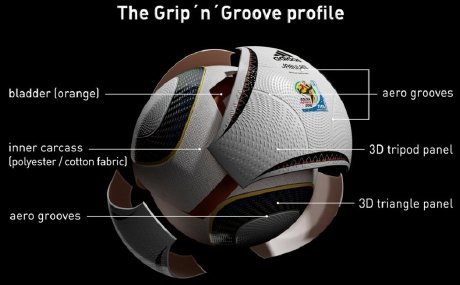
Adil Najam Unlike the 2006 FIFA World Cup, when Pakistan was represented in each and every game of the world’s premier sporting tournament – in the shape of Pakistani manufactured footballs – Pakistan will be missing in action at the 2010 FIFA Football World Cup that starts in South Africa later this week. This year’s official match football for the World Cup – Jabulani or Jo’bulani (manufactured by Adidas and meaning ‘to celebrate’ in Zulu – will come from China, not Pakistan. Pakistani footballs, of course, have a long history of being kicked around in Football World Cup tournaments. From the iconic Telstar (which was the first designated official game ball, at the 1970 Mexico World Cup and then at the 1974 World Cup in Germany) to the even more iconic Tango (the official ball of the 1978 and 1982 World Cups in Argentina and Spain), and even at the last World Cup in 2006 in Germany, hand-stitched, high-performance from Pakistan – really from Sialkot – have been the preferred choice for Adidas, the official providers of match balls to the FIFA World Cups. No longer so, it seems. Indeed, from once commanding as much as 85% of the world’s market in footballs, Pakistani manufacturers now believe that they will supply no more than 30-40 percent of the footballs sold around this mega-event. Pakistan, of course, is not a football power at all – ranked 165th out of 202 countries in the world. But like everywhere else, football fever can get high in Pakistan too ( here and here). This year, however, we would no longer be kicked around on the FIFA World Cup soccer fields. This should be read not just as a matter of national pride, but as yet another sign of the changing global economic landscape, Pakistan’s sliding economic fortunes, and a need to focus more deeply on Pakistan’s enterprise-level economic structures than we often do. The most commonly cited reason for Pakistan’s dwindling football fortunes is the use of child labor in the football industry. Even though the practice is now far less than it used to be, there are still instances of it and the stigma has lingered. In this particular case, technology may also have a lot to do with it. The new ball is being described in technological rather than craft terms: “The newly developed ‘Grip’n’Groove’ profile provides the best players in the world with a ball allowing an exceptionally stable flight and perfect grip under all conditions. Comprising only eight, completely new, thermally bonded 3-D panels, which for the first time are spherically molded, the ball is perfectly round and even more accurate than ever before.” And, of course, Pakistan’s security situation also must have had some impact in perceptions. An good overview report of the football manufacturing industry in Pakistan was recently published in The Express Tribune: Soccer or football is the most popular sport in the world. And for many, this means great economic opportunity. At one time, Pakistan’s export city of Sialkot was catering to 85 per cent of the total world demand for high-quality hand-stitched inflatable balls. A workforce of 85,000 was employed to produce 60 million balls per year worth $210 million. In Fifa World Cup years the demand for stitched balls rises by 70 per cent. Consecutive governments however, ignored this industry and failed to plan ahead to tackle the growing competition from China, India and Japan. For a long time this vital industry also faced criticism from European countries and especially from United States with allegations of using child labour. The Sialkot Chamber of Commerce and Industry took prompt measures to curb child labour from the soccer ball industry in accordance with the Atlanta Agreement signed with the International Labour Organisation (ILO) and Unicef in February 1997. It is estimated that some 93 per cent of child labour was progressively eradicated from this vital industry and necessary steps were taken to provide social protection to children and their families. The children who were associated with this industry were provided with good schooling. The vital steps taken by the soccer manufacturers and exporter were highly praised by the then United States President Bill Clinton in the address at the ILO convention at Geneva in June 1999. The Sialkot football industry has been contributing millions of export dollars to the national kitty but in the year 2006 the industry’s share in the international market took a significant hit with the entry of new players in the market, notably China and India. Manufacturers from these countries were able to supply balls at a much cheaper rate. According to industry sources, local soccer ball manufacturers have been able to grab around 30 to 40 per cent of the total orders floated globally for the upcoming Fifa World Cup. This is a sharp decline from the 70-80 per cent bagged during the 1998 and 2002 World tournaments. The local football industry earned $164 million in export earnings in the financial year 09, as against an average of $221 million per annum earned during financial years 2005-08. Power and gas shortage are not making it any easier for the industry, and sources say that a number of business have failed to meet deadlines which has dented their reputation. Technology was also a major factor in tilting the balance against the local industry. The penetration of machine-made balls hit the Sialkot hand made stitched soccer industry. And in the present scenario of fast growing globalisation hand-stitched balls will not be able to compete with machine-made footballs. It is important that the local industry moves forward and embraces new technology to meet the needs of the international market. Industry sources also say that China has received large export orders of footballs from a number of countries ahead of the June 2010 Football World Cup. Pakistan Sports Goods Manufacturers and Exporters Association is rightly concerned over this state of affairs. According to Arif Mehmood Sheikh, a former chairman (PSGMEA) the shift of a large number of orders to China should serve as an ‘eye opener’ for every one. He said that the factors behind the diversion of export orders to China was a combination of rising cost of production and inability to meet deadlines, which in turn were caused by rising POL prices and unreliable power supply. This has made it difficult for Sialkot exporters to compete with manufacturers in China, India, Nepal and Thailand. With the government looking for new avenues to bridge the fiscal deficit and the trade deficit, it is very important that measures be taken to build upon the advantages that Pakistan holds in the global market, and not allow others to encroach upon them. The Sialkot exporters have urged the government to come up with some sort of trade related package to stop the diversion of football export orders through the Trade Development Authority, likewise enforcing suitable measures to encourage the export of hand stitched fooballs. Outdated manufacturing techniques still in use by the local industry is a major hurdle in enhancing exports. This industry for its survival is in dire need of advanced technology and early provisioning of skilled labour. The Sialkot manufacturers and exporters have realised that in the event of a change in the global trend from hand stitched balls to mechanically stitched balls they will also need to make the shift. In order to cope with the menace of machine made balls, the Small and Medium Enterprise Development Authority has at put in place the final steps for the establishing of the Sports Industries Development Centre. It is expected that this project worth Rs435 million will enable the Sialkot sports manufacturing industry to adopt modern technology, without which there is no going forward. Sad as this situation is, I intend to follow the World Cup in South Africa, as will so many other Pakistanis. Probably no where more so than in Lyari – a community whose passion for soccer is boundless.

Read the rest here:
Pakistan Out of 2010 FIFA Football World Cup

Waka Waka

Shakira will be in 3D this weekend when the FIFA World Cup Official 2010 video is released . This will be the first time ever that millions of people will see a 3D performance video at the same time around the world. Shakira sings Waka Waka (This Time for Africa) as the Official 2010 FIFA World Cup Song. Yesterday, the official release of the 2010 FIFA World Cup video was released complimenting this song and giving viewers around the world a chance to catch the FIFA World Cup fever. The song, focusing on the host country of the region, gives the chance to see more of the country and bring together the world under one sport. The vivid colors of the area are seen in the clothes as well as video for the sport. The world is bracing for an exciting time of World Cup fever. Teams have been arriving in South America over the week with hundreds of fans already present. Bracing for one of the largest events means having the world come together and scream every time a goal is scored.

Go here to read the rest:
Waka Waka

World Cup Impac on Bussiness

World Cup fever is set to trigger headaches for HR and IT managers at businesses big and small around the world. For one, there’s likely to be a higher than normal level of absenteeism in certain countries when their nations are playing. Italians, for example, maybe unusually absent from work June 14, 20 and 24 while Brits may be scarce June 12, 18 and 23. Then there’s the issue of network traffic: With games streamed live and on-demand, more than a few employees may be tempted to catch up on the action online. Given the density of data they’ll be pulling, it could cause corporate networks to slow to a crawl as all those video packets are routed through. Of course, company executives can attempt to nip this all in the bud with a well-timed missive reminding staff that work is work and play is play and that World Cup games are strictly for outside work consumption. But that wouldn’t be very sporting, says Susan Doniz, former CIO at multi-national giant Proctor and Gamble and newly promoted to run global service for P&G’s line of beauty and grooming products. “We had this issue when I was in Argentina with P&G,” she says. “I wanted to book a meeting and everyone said, ‘oh, no, you can’t at that time that day.’” At first the idea a mere soccer game would interfere with productivity was a complete culture shock but she soon became a convert to the game. “In Argentina, in Buenos Aires, I never saw the streets so empty as when there was a big game on,” she says. “I worked all over Latin America and Mexico and in Europe too. At one point we realized that because a game was on there would be no one to run the production line at one of our factories. It seemed absurd that a soccer game would shut down a line but we had to do something to accommodate the employees. We set up TVs in the common area so they could watch the game.” P&G employees this time around across the globe will be encouraged to come to the common areas to watch games on TV. “It’s a two for one,” says Doniz. “One, it’s good from an employee moral aspect. You have young people, older workers, everyone, sharing a moment together. In fact, it becomes strange if they stay in their cubicles and don’t socialize. And of course, it means the network isn’t getting slowed down.” It also cuts across all levels, she adds, meaning it’s truly a moment shared in fun and not fabricated. “I think our Canadian CIO is Italian so I’m betting he’s going to be watching with everyone too.”

More:
World Cup Impac on Bussiness