After riding train after train and whatnot , Denzel Washington is back navigating giant hunks of careening metal in Robert Zemeckis ‘s Flight , which marks the director’s return to live-action filmmaking after a decade spent trying (in vain, IMO) to conquer the uncanny valley. So how well do director and star succeed in piquing your interest in a movie about an airline pilot (Washington) who saves a plane full of passengers only to have his heroism — and drinking habits — come under scrutiny in the aftermath? Below, watch the first trailer for Flight , which boasts a stellar cast surrounding Washington that includes Bruce Greenwood, Don Cheadle, Kelly Reilly, John Goodman, and Melissa Leo. It’s not all that revealing, which is a good thing in this age of spoiler-happy marketing, though there’s potential for some big unknown twist to rock us to our core in the last act. So what’s there to look forward to? Washington as a normal dude trying to figure it out, I suppose — or as a hero hiding some dark secret, which would be more interesting — and, of course, the sight of Denzel rolling a freaking airplane on top of some houses , or whatever. That should be enough for me. And yet… I’m just lukewarm on Flight . Is there any reason to see it besides the fact that it’s Denzel being Denzel and Zemeckis maybe-recapturing the knack for storytelling on display in his best live-action hits? Head to Apple for the trailer premiere. Then again, I am about to get on a flight tomorrow morning, so forgive me if I’m not too juiced for a movie about the one airplane that falls apart in the sky for no good reason. Flight synopsis: In this action-packed mystery thriller, Academy Award winner Denzel Washington stars as Whip Whitaker, a seasoned airline pilot who miraculously crash-lands his plane after a mid-air catastrophe, saving nearly every soul on board. After the crash, Whip is hailed as a hero, but as more is learned, more questions than answers arise as to who or what was really at fault, and what really happened on that plane? Flight is in theaters November 2. [via Apple ]
Band is aiming to top Jay-Z’s live concert record during the June 27 O Music Awards live stream. By Gil Kaufman The Flaming Lips’ Wayne Coyne Photo: Tim Mosenfelder/Getty Images It takes a village to topple a record. That seems to be the thinking behind the Flaming Lips ‘ efforts to gather an army of musical cohorts to help them take aim at Jay-Z’s record for the most live concerts in 24 hours. As part of a record attempt that will take place over 24 hours during the June 27 O Music Awards , the Lips will try to make it into the Guinness Book of World Records by playing shows in eight different cities. We can now reveal that they will get some support from an eclectic group of musicians that includes festival favorites Grace Potter and the Nocturnals, modern bluesman Gary Clark Jr., country singer Hunter Hayes, and indie rock acts Givers, New Fumes, Neon Indian, and Grimes. Beginning June 27, the O Music Awards will play out across all of MTV’s screens and linear networks in the form of the world’s first 24-hour award-show live stream via a historic and hectic bus ride through the Mississippi Delta, the birthplace of rock and roll. Two-time O Music Award nominees and multiple Grammy winners Flaming Lips will board a vintage tour bus named Endeavor and zigzag across the region in an attempt to break the world record currently held by Jay-Z for the most live concerts in 24 hours. More support acts will be named soon, and each will play a full set before making way for the Lips to take the stage for their mini-sets with unique collaborations and special guests. Tickets for the shows go on sale Thursday (June 7) and can be purchased through the individual venues. Partial proceeds from the show will be donated to VH1’s Save the Music Foundation . Also, the entire show will be streamed live on OMusicAwards.com and accessible on all platforms including mobile and tablets. “I don’t remember if I was asked or if I volunteered. … But I’ve accepted the job of not driving but commandeering the Magical Mystery Merry Prankster bus,” Lips frontman Wayne Coyne told MTV News. “I’ve accepted the attempt at breaking the world record of performing eight shows in 24 hours. And I’ve explained to the music freaks at MTV, VH1 and CMT that I am not a host. … But I always liked the way Jerry Lewis would get all sweaty toward the end of his yearly telethon. To play and sing Flaming Lips songs at eight in the morning, well … I’m open to new experiences.” During the 24-hour live stream, 24 awards will be presented to winners. Fans can vote now up until the show via the O Music Awards website in a wide assortment of categories that include Must Follow Artist on Twitter, Best Online Concert Experience, Most Adorable Viral Star, Fan Army FTW, Best Music App and Digital Genius Award. Nearly 10 million votes have been cast since voting kicked off on May 23. You never know what’s going to happen on the live stream, where the Lips will be constantly “on,” as cameras follow them on the bus, on the stage and everywhere in between. Along the way, the band will meet up with fans and presenters who will dole out awards and, of course, deal with all the pitfalls and unexpected detours that a multi-state road trip entails — flat tires, stops at musical monuments, and perhaps the occasional music-making special guests and hitchhikers. The day before the big show, June 26, the Lips will release a physical version of The Flaming Lips and Heady Fwends, the previously digital-only album featuring unique collaborations with Yoko Ono, Nick Cave, Bon Iver, Ke$ha and an exclusive new track recorded with Ghostland Observatory’s Aaron Behrens. The Flaming Lips O Music Awards itinerary:
Band is aiming to top Jay-Z’s live concert record during the June 27 O Music Awards live stream. By Gil Kaufman The Flaming Lips’ Wayne Coyne Photo: Tim Mosenfelder/Getty Images It takes a village to topple a record. That seems to be the thinking behind the Flaming Lips ‘ efforts to gather an army of musical cohorts to help them take aim at Jay-Z’s record for the most live concerts in 24 hours. As part of a record attempt that will take place over 24 hours during the June 27 O Music Awards , the Lips will try to make it into the Guinness Book of World Records by playing shows in eight different cities. We can now reveal that they will get some support from an eclectic group of musicians that includes festival favorites Grace Potter and the Nocturnals, modern bluesman Gary Clark Jr., country singer Hunter Hayes, and indie rock acts Givers, New Fumes, Neon Indian, and Grimes. Beginning June 27, the O Music Awards will play out across all of MTV’s screens and linear networks in the form of the world’s first 24-hour award-show live stream via a historic and hectic bus ride through the Mississippi Delta, the birthplace of rock and roll. Two-time O Music Award nominees and multiple Grammy winners Flaming Lips will board a vintage tour bus named Endeavor and zigzag across the region in an attempt to break the world record currently held by Jay-Z for the most live concerts in 24 hours. More support acts will be named soon, and each will play a full set before making way for the Lips to take the stage for their mini-sets with unique collaborations and special guests. Tickets for the shows go on sale Thursday (June 7) and can be purchased through the individual venues. Partial proceeds from the show will be donated to VH1’s Save the Music Foundation . Also, the entire show will be streamed live on OMusicAwards.com and accessible on all platforms including mobile and tablets. “I don’t remember if I was asked or if I volunteered. … But I’ve accepted the job of not driving but commandeering the Magical Mystery Merry Prankster bus,” Lips frontman Wayne Coyne told MTV News. “I’ve accepted the attempt at breaking the world record of performing eight shows in 24 hours. And I’ve explained to the music freaks at MTV, VH1 and CMT that I am not a host. … But I always liked the way Jerry Lewis would get all sweaty toward the end of his yearly telethon. To play and sing Flaming Lips songs at eight in the morning, well … I’m open to new experiences.” During the 24-hour live stream, 24 awards will be presented to winners. Fans can vote now up until the show via the O Music Awards website in a wide assortment of categories that include Must Follow Artist on Twitter, Best Online Concert Experience, Most Adorable Viral Star, Fan Army FTW, Best Music App and Digital Genius Award. Nearly 10 million votes have been cast since voting kicked off on May 23. You never know what’s going to happen on the live stream, where the Lips will be constantly “on,” as cameras follow them on the bus, on the stage and everywhere in between. Along the way, the band will meet up with fans and presenters who will dole out awards and, of course, deal with all the pitfalls and unexpected detours that a multi-state road trip entails — flat tires, stops at musical monuments, and perhaps the occasional music-making special guests and hitchhikers. The day before the big show, June 26, the Lips will release a physical version of The Flaming Lips and Heady Fwends, the previously digital-only album featuring unique collaborations with Yoko Ono, Nick Cave, Bon Iver, Ke$ha and an exclusive new track recorded with Ghostland Observatory’s Aaron Behrens. The Flaming Lips O Music Awards itinerary:
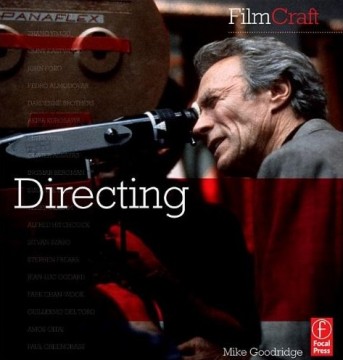
Oscar-nominated director Guillermo del Toro has been in the craft of filmmaking since he was 16, filling roles as diverse as P.A., assistant director and makeup effects. He made his first film Cronos at 28 and received his Academy Award-nomination in 2007 for Pan’s Labyrinth , making him one of the most prominent filmmakers to emerge from his native Mexico. In a candid interview, he explains how he learned filmmaking in author Mike Goodridge’s new book, FilmCraft: Directing . Goodridge, who until recently served as editor of Screen International and is now CEO of the international sales and financing company Protagonist Pictures wrote the book which features in-depth interviews with 16 of the world’s celebrated and respected film directors including Del Toro, Clint Eastwood ( Million Dollar Baby ) Paul Greengrass ( The Bourne Supremacy ), Peter Weir ( The Truman Show ), Terry Gilliam ( Brazil ) and Park Chan-wook ( Oldboy ). These and other filmmakers share their insights and experiences on development, storytelling/writing, working with actors and cinematographers, as well as other areas necessary to completing a successful film. In this excerpt from the book, which will be available via Amazon beginning June 15th, Guillermo del Toro gives his take on the mistakes and triumphs of his first movie as well as the first movie of other filmmaking greats, a life lesson courtesy of John Lennon, Tom Cruise’s take on filmmaking, what made him cry during his first movie, making ‘everything’ theatrical and why having “enough money” will get you, err… screwed. Director Guillermo Del Toro excerpt from FilmCraft: Directing : I came from the provinces, from Guadalajara, which is the second largest city in Mexico and nobody makes movies there. When I was a teenager, I started building relationships in Mexico City and I started as a blue-collar member of the crew. I was either a boom guy or a PA or an assistant director. I was makeup effects. I did my floor time in both TV and movies. My first professional work on a movie was at the age of 16 and I made Cronos when I was 28, so I had twelve solid years of doing just about everything in between. If somebody needed something, I would do it. I even did illegal stunt driving. But what happened is that I learned a little bit of everything and, once you put your time into exploring everything, you get to know what every piece of grip equipment is called and how many you need, and how to do post — I edited my own movies and did the post sound effects on all of them. So to some extent, directing came naturally to me from my first movie. My first movie Cronos is not in any way a perfect movie, but it’s a movie full of conviction. When you make your first movie, whatever mistakes you make are very glaring, but if you have conviction, and I would even say cinematic faith, this also shines through. I recently watched Cronos again and I thought, “I like this kid,” he has possibilities. After your first movie, with a little bit of craft, diligence, and more importantly, experience, you learn to make virtues out of some of your defects. What I mean is that any first movie has good moments, even if it is not entirely perfect. It can be a filmmaker as famous as you like, such as Stanley Kubrick, whose first film F ear and Desire (1953) is about 70 minutes long and stars Paul Mazursky. It is very stilted, very awkwardly paced, full of stuff that doesn’t work, the actors speak in a patois, and it has a very non-naturalistic rhythm. But what is incredibly fascinating is that the very stilted quality, that artificial rhythm, eventually became his trademark in later films. He bypasses it in more naturalistic films like The Killing (1956) and Paths of Glory (1957), but comes back to that type of hyperrealism or strange filtered reality in his later movies, and he is in complete control of it there. Kubrick used the tools he acquired in making other films to transform what you thought was a defect in Fear and Desire into a virtue. In my case, when I make movies in Spanish, starting with Cronos , I purposefully avoid characterizing certain things in the conventional Hollywood sense, and that comes out as a blatant defect. Specifically, I had shot a much longer film, including a whole section between the husband and wife where she noticed that he is getting younger and they start falling in love again. At night, he would come and sleep underneath her bed. But I couldn’t make it work. The way I staged it was simply too stilted and strange, and I didn’t feel comfortable leaving it as part of the movie. Even to this day, I think there is a mix of different tones in that movie. I change from the dramatic to the comedic too often. I try to do it generically, mixing horror with melodrama, and there are moments in Cronos that are really jarring for me. I sometimes allowed Ron Perlman to be too broad and it simply didn’t work. I think I did it better in my later movies. I don’t know whether that mix of genres is my trademark. One of the things that was very influential for me when I was kid was the book by Tolkien in which he discussed fairy stories in literature. I remember him saying in that book that you should make the story recognizable enough to be rooted in reality, but outlandish enough to be a flight of fancy. So I try to mix an almost prosaic approach, or at least a rigid historical context, with fantastic elements. I treat the fantasy characters very naturalistically or else I root the story in a precise context like The Devil’s Backbone or Pan’s Labyrinth , or in Cronos , post-NAFTA Mexico. As Tolkien says, when you give the audience a taste of what they can recognize, they immediately accept the rest of the concoction; it’s almost like wrapping a pill in bacon for a dog to swallow it. You need, for example, the bacon of domesticity in Cronos . I wanted to shoot that family as a very middle-class family in Mexico. I wanted a kitchen that looked like a kitchen you’d recognize, a really ordinary bedroom and very mild, neat clothing design. Out of that middle-class reality, I wanted a single anomaly — the mechanical clockwork scarab device. If the audience believes that this abnormality is as real as it can be, they will respond to the story. Many directors think that the more you keep the creature in the shadows and don’t show it, the better it is, but I don’t believe that. I don’t have monsters in my movies, I have characters, so I shoot the monsters as characters. For example, in Hellboy , I shot Abe Sapien, the fish-man, like any other actor. I didn’t fuss about it, I shot the monster with the same conviction that I would shoot Cary Grant or Brad Pitt; in other words, if I shot it in a different way than I would the regular actors, I would be making a mistake. What I do in every movie very consciously is to ensure that this anomaly is shot two notches above actual reality, so it’s weird enough to accommodate the monster, but not too stylistic that it’s unrecognizable. For example, everything you see in Pan’s Labyrinth — the house, the furniture — is fabricated to be slightly more theatrical than it needed to be. The uniforms for the captain and his guards are exactly what were worn at the time, but we tweaked the cut and the collar to make them more theatrical. Everything around the creatures, therefore, exists like a terrarium for them to live in so that when it comes to shoot them, I can shoot them in a normal way. I was very nervous on Cronos , but the adrenaline carried me through. Directing is almost like keeping four balls in the air on a monocycle with a train approaching behind you. There were days, for example, like the scene with the husband sleeping under the bed, where I knew I’d fucked up. The makeup was wrong and we didn’t have time to go back and change it, we didn’t even have time to test it. The light was wrong. Everything was wrong, and I arrived home to my wife that night and cried. I said that I had destroyed the scene I had dreamt of for years. I didn’t have the luxury of reshoots. Of course, you can only break down in front of your wife, or your partner, or your parents. In front of the staff on the film, you need to keep total control. You don’t want anyone thinking the general is afraid—you have to be leading the charge. There are two very lonely positions on a movie set: the actor and the director. The cinematographer has a close liaison with the director, the gaffer, the grip, etc. The director is alone on one end of the lens and the actor is alone on the other. That’s why the great, most satisfying partnerships on set are when a director and actor come to love and support each other. Being from Mexico is an enormous part of who I am as a filmmaker. The panache, the sense of melodrama, and the madness I have in my movies that allows me to mix historical events with fictional creatures, all comes from an almost surreal Mexican sensibility. I’m really prone to melodrama. This comes from watching Mexican melodrama obsessively, to the point where I was watching The Devil’s Backbone with a Spanish architect and the architect said to me that it was more Mexico than Spain; the characters were acting like Latin characters. If my father hadn’t been kidnapped in 1998 then frankly I would be making Mexican movies interspersed with the European and American. Since 1998, I cannot go back to Mexico because I would be too visible a target, especially when there is a printed schedule of where I am going to be every day for the entire run of a shoot. I think of the audience every second during writing; I think of them as me. I question how I would understand something, or what would make me feel a certain way. When I’m shooting a scene that moves the characters, I weep, I feel the emotion on set, so when I am writing it, if it doesn’t work, I don’t print it out until I have that feeling. Creating tension is a different skill to creating fear. For fear, you try to create atmosphere. You ensure the scene is alive visually before anything is added, then you craft the silence very carefully because silence often equals fear. Rarely can you elicit fear with music unless the music is used very discreetly, underlining the scene in a way that is almost invisible. When the Pale Man appears in Pan’s Labyrinth there is music, but Javier [Navarrete, the film’s composer] is almost just underlining his movements. It becomes like a sound effect. Silence is one of the things that you learn to craft the most because there is never real silence in a movie; you always have distant wind, cars, dogs barking, or crickets in the distance. I think really well-crafted silence creates tension, and by the same token an empty frame, an empty corridor for example — if it’s empty in the right, creepy way — is a tool. You know if a scene’s not working on set, and as you get older and craftier, you can learn to re-direct it in post. You can patch it up in your coverage and recover it—you can even end up with a great scene because beauty rarely comes out of perfection. For something to work, I think it has to come out of emotional turmoil. You can’t encapsulate the perfect melody; a huge component of it is instinctive. Then, of course, there are the actors. Many times you storyboard and rehearse with the actor, and then you come to the scene and it’s not working. But then you try something different and something suddenly happens that makes it work. It’s very raw. It’s funny, we enthrone this idea of the perfect filmmaker, this myth of the all controlling, all-seeing, all-encompassing person, but even for Kubrick or von Stroheim there is a part of the process that is entirely instinctive. I once asked Tom Cruise about it and he confirmed that Kubrick often found things in a panic on Eyes Wide Shut (1999). I love imperfection. I have been friends with James Cameron since 1992 and because he is so incredibly precise, people sometimes don’t think he is human, but the beauty of being a close friend is that I’ve seen him burn the midnight oil and toil and sweat. These imperfections in the façade are what make the work more admirable. Art depends on that human touch that doesn’t make perfection; in fact the filmmakers and films I am most attracted to require a level of human imperfection. On the big effects films, you try to prepare thoroughly but there are always surprises. John Lennon said, “Life is what happens when you are making other plans” and I think film is what happens when you are making other plans. You come onto the set and either the actor or the material doesn’t come out as you expect and the film comes out better for it. If you have either experience or inspiration, one of the two will get you through. One you accumulate through the years, the other you cherish. As a young filmmaker you’re full of inspiration and if you are unlucky you are only trading it in for experience. You need to remain on dangerous ground to continue to be inspired. I am always tackling things I shouldn’t tackle and meddling with stuff I shouldn’t meddle with. You never have enough money. If you ever feel one day you have enough money, that’s the day you’re fucked. FilmCraft: Directing is available via Amazon beginning June 15th. Follow Movieline on Twitter .
Stop. Collaborate and listen. Ice is back with a brand new invention. No, really! He is. Rob Van Winkle, who you know as ‘90s rap sensation Vanilla Ice, has a major role in this summer’s new Adam Sandler comedy That’s My Boy , in which he plays himself, Vanilla Ice. The set-up: Donny Berger (Sandler) became famous in the ‘80s for having an affair with his hot teacher. Donny knew Ice from the flash in the pan/has-been circuit, and goes back to hang out with Ice when he reunites with the grown son ( Andy Samberg ) he fathered. Winkle joined the stars of That’s My Boy at a press conference over the weekend, and he stole the panel right from Sandler and Samberg. He’s still dropping mad rhymes, and they’re full of wisdom from his 20 years of growing up and self-reflection on the Vanilla Ice days. We could all take a lesson from Vanilla Ice, so start with some of these. 1. No slippin’ on your pimpin’. “You keep your hustle tight and you never get caught slippin’ on your pimpin’,” Winkle said when the panel was asked how they deal with failures in their careers. Our takeaway is that he has not been slippin’ on his pimpin’, since Winkle keeps working, even on reality shows like Surreal Life and Celebrity Bull Riding . “If you get caught slippin’ on your pimpin’ you’re up sh*t creek without a paddle.” 2. Well, just in case you need that paddle… If you end up paddle-less in a creek, all is not lost. “Learn how to swim through the trenches and get to the other side and when you get there it’ll be paradise for you. I was in the trenches, trying to get to the other side. Sh*t creek, I found a paddle. [Sandler] helped me with the other paddle and here we are.” 3. Embrace the past. “We are who we are because of who we were, which I had to accept, and there’s a little truth to that,” Winkle said when we asked if he’s always thinking in deep wisdom and mad rhymes. 4. Look to the future. “Yesterday’s history, tomorrow is a mystery,” Winkle said when asked if this movie comeback could lead to a Cool As Ice 2. Not only would a Cool as Ice sequel be awesome, it’s also good advice in general. “Take it day by day, man. Get in where you fit in and enjoy the ride. You never know about it.” 5. These mad rhymes matter. These slogans kept the press laughing, but Winkle explained he truly uses them to get through life. “That’s one thing I’ve learned, I live off these little phrases. It’s not all jokes, but these little phrases, they’re more valuable than thousands of dollars worth of therapy to me. They make sense.” 6. Love yourself. “Be yourself, enjoy yourself,” was another one of Winkle’s life lessons. More specifically, find the place that’s right for you, whether it’s rapping or starring in an Adam Sandler movie. “I just get in where I fit in.” 7. Be happy. In a genre of music that can often spiral into anger and violence, positivity is important. “Show me a smile and I’ll show you one back. They’re contagious. So, it works for me. Stay positive, good things happen. Look where I’m at.” 8. Mind the company you keep. It also matters who you let in your life. The Sandler crew was good for Winkle, but be careful of your entourage. “Show me who your friends are and I’ll show you who you are. Karma, believe in it. It’s real. It comes back to you.” 9. Listen to your mother (and word to her!) Since the film is about an embarrassing parent, the panel was asked what they learned from their parents. Winkle shared his mother’s lesson. Maybe mad wisdom runs in the family. “My mom always told me, ‘Act smarter than you are. Always know where your exit is in case you get into too much trouble.’” To borrow from the immortal popular words of Mr. Van Winkle: If there was a problem, yo, he’ll solve it. That’s My Boy opens June 15.
Also up for Tuesday morning’s new round up, Oscilloscope picks up a SXSW selection, MTV Movie Awards suffers a decline in ratings. Foo Fighters drummer Taylor Hawkins readies for the camera to play the role of a rock legend and Venice taps an Italian actor to lead its Horizons jury. Oscilloscope Nabs SXSW Doc Tchoupitoulas Pronounced “Chop-Ih-Tou-Less,” the New York-based specialty distributor picked up North American rights to the feature directed by Bill and Turner Ross. The film is described as a “lyrical documentary that follows three adolescent brothers as they journey through one night in New Orleans, encountering a vibrant kaleidoscope of dancers, musicians, hustlers, and revelers parading through the lamplit streets.” The deal was finalized at the recently completed Cannes Film Festival. David Laub and Dan Berger of Oscilloscope negotiated the deal with George Rush on behalf of the filmmakers. The film is produced by the Ross Brothers along with Michael Gottwald, Dan Janvey, and Josh Penn of Court 13. 1st Look East: Korean Film Festival Takes Shape Grauman’s Chinese Theatre in Hollywood will be the home of the first annual event celebrating Korean cinema June 23 – 24. A 3D version of cult favorite The Host is on tap to join the roster of ten films, including U.S. premieres Flower in Hell and A Hometown in My Heart . Around the ‘net… Next Up for Ridley Scott: Moses The Prometheus director had some choice words for religion – all religions – and let it slip that he will direct the film about the Biblical figure, noting, “I probably shouldn’t have let that slip out. I’m not supposed to say anything. It’s definitely in the cards though…” Esquire reports . Amazon Studios to Conquer Rome with Zombies The studio has tapped Clive Barker to re-write and direct Zombies vs. Gladiators in which a shaman who faces death in the Coliseum casts a spell creating the world’s first zombies. But a gladiator steps in to try and end the zombie menace and save Rome, Deadline reports . MTV Movie Awards Takes a Hit The zany awards show saw a 28% decline in the 12 – 34 age range, perhaps a victim of the waning Twilight craze, Deadline reports . Foo Fighters Drummer to Play Iggy Pop Taylor Hawkins will play rock legend Iggy Pop in the upcoming rock film CBGB . Also joining the cast are The Big Bang Theory ‘s Johnny Galecki as music manager Terry Ork and portraying Patti Smith will be The Borgias actress Mickey Sumner, THR reports . Favino to Preside over Venice’s Horizons Jury Italian actor Pierfrancesco Favino ( Angles and Demons ) will lead the Venice Film Festival’s cutting-edge Horizons section. Venice’s new artistic director Alberto Barbera has tightened the Horizons section’s lineup to 18 feature films, including some docs, representing “the latest trends in global cinema,” Variety reports .
You may look at this first photo from the set of Iron Man 3 and think, “Gee, Tony Stark has a lot of toys.” I look at it — a shot of Robert Downey Jr. as Stark, gazing at his wall of Iron Man suits in a lab/Hall of Ego scattered with gadgets and gizmos aplenty — and remember I need to do laundry. Also, I need a bigger closet. Why does Tony Stark have so many wardrobe options? On the flip side, you could go way into depth surmising what all this hardware means, as EW’s Anthony Breznican does: It’s a big responsibility for whomever — we presume Stark’s automated butler JARVIS — to guard this stuff. Although Marvel Studios hasn’t released details of the plot, if you couple this official image with paparazzi shots last week revealing the Iron Patriot, a character using stolen Stark tech who literally wraps his armor in the flag to justify his actions, we may be seeing the issue of proliferation rising again for ol’ Tony. Sure, sure. But wait… what could this one face-obscured behind-the-scenes shot mean for the meaning of Iron Man 3 ? What comes next could be too powerful even for Stark to control. If rumors are true that Iron Man 3 filmmaker Shane Black ( Kiss Kiss Bang Bang ) is taking his cues from the Iron Man comic series Extremis , which deals with nanotechnology injected directly into human beings to make them more powerful, then it’s no longer a matter of who is inside the weapon than what kind of weapon is inside the person. And that next case on the wall, which looks eerily like a row of coffins now, would have to contain Tony Stark himself . WHOA. Way existential, man. Who agrees? Who’s excited? Who’s wondering if we’re really butt-gazing at RDJ’s stand-in while the real RDJ is over snacking at craft services? [ EW ]
Also in Tuesday afternoon’s news round-up, Participant Media picks up Mexican actor/filmmaker Diego Luna’s latest project starring Michael Peña and America Ferrera, Relativity scores Alberto Iglesias for its latest project, indie thriller Backgammon gets rolling, meeting young Hollywood’s “It-Photographer” and Moscow’s Bolshoi to hit U.S. theaters. Participant Takes Rights to Diego Luna’s Chavez Participant Media has taken North American rights to the film which stars Crash actor Michael Peña as the famed California labor organizer Cesar Chavez. Currently filming in Sonora, Mexico, the film also stars America Ferrera, Rosario Dawson and Wes Bentley in a script by Hotel Rwanda writer Keir Pearson. The story revolves around “Chavez’s fearless determination in organizing the largest non-violent protest in U.S. history to accomplish his ultimate goal of obtaining basic human rights for over 50,000 farm workers in California.” Relativity Taps Alberto Iglesias to Score Scott Cooper’s Out of the Furnace The three-time Oscar®-nominated composer Alberto Iglesias ( Tinker Tailor Soldier Spy ) to score the gritty drama currently-titled Out of the Furnace , written and directed Scott Cooper ( Crazy Heart ). The film stars Christian Bale, Woody Harrelson, Casey Affleck, Forest Whitaker, Willem Dafoe and Sam Shepard. Indie Thriller Backgammon Begins Shoot 3:1 Cinema and Fischer Productions have begun production on the project, based on the cult novel Bloody Baudelaire by R.B. Russell. Directed by Francisco Orvañanos stars group of up-and-comers including Noah Silver ( The Borgias ), Brittany Allen ( The Rocker ) Alex Beh ( Sugar ), Olivia Crocicchia ( Terri ) and Christian Alexander ( The Lying Game ). Around the ‘net… Jon Favreau May Be Heading to Jersey Boys The Iron Man director is apparently the frontrunner to direct GK Films’ Jersey Boys , Graham King’s feature adaptation of the Broadway musical “Jersey Boys: The Story of Frankie Valli & The Four Seasons.” The story revolves around Valli and the other members of pop group Four Seasons during their meteoric rise to stardom, Variety reports . Police Academy Reboot Taps Jeremy Garelick Garelick, who wrote The Break-up is joining New Line’s revival of the Police Academy franchise which produced seven versions of the comedy beginning in the ’80s, Deadline reports . Extreme Photographer of Lindsay Lohan & Young Hollywood Gets Notoriety and Threats Tyler Shields, who photographed Lindsay Lohan with a gun in her mouth, is getting death threats with his new series, which shows his g/f Francesca Eastwood (daughter of Clint) destroying a $100K Hermès Birkin bag. Shields is young Hollywood’s de factor house photographer, The Daily Beast reports . Six Ballets to Emerge at Cinemark Theaters: Summer Emerging Pictures will present “Ballet in Cinema” at 50 Cinemark Theatres beginning in June. The six recently recorded live ballets will play across the U.S. through August inkling performances from Moscow’s Bolshoi Ballet, Thompson on Hollywood reports .
Mom arrested for cheering and shouting during daughters graduation We don’t think she did anything wrong: Shannon Cooper cheered as her daughter walked across the stage to get her diploma from South Florence High School Saturday night, but just minutes later, Shannon was handcuffed and arrested. Wait till you peep her interview…
1, 2, the Army’s comin’ for you… Al Qaeda Leader Abu Yahya al-Libi Has Been Killed By U.S. Drones Abu Yahya al-Libi, the No. 2 man in al Qaeda and a longtime public face of the terror network, is dead, White House spokesman Jay Carney confirmed Tuesday. Al-Libi’s death was “another serious blow to core al Qaeda,” said Carney, who was unable to provide further details. “His death is part of the degradation taking place in core al Qaeda in the last several years,” Carney said. Earlier Tuesday, U.S. officials said that al-Libi was killed by a CIA drone strike in Pakistan launched Monday. Al-Libi’s death marks one of the most significant blows to al Qaeda since the U.S. military killed Osama bin Laden in a daring nighttime raid in Pakistan a year ago. Al-Libi was second-in-command behind al Qaeda leader Ayman al-Zawahiri, who took the helm after bin Laden’s death. “There is no one who even comes close in terms of replacing the expertise (al Qaeda) has just lost,” said the U.S. official, who spoke on the condition of anonymity. Al-Libi “played a critical role in the group’s planning against the West, providing oversight of the external operations efforts,” the official said. “Zawahiri will be hard-pressed to find any one person who can readily step into Abu Yahya’s shoes,” the official said. “In addition to his gravitas as a longstanding member of AQ’s leadership, Abu Yahya’s religious credentials gave him the authority to issue fatwas, operational approvals and guidance to the core group in Pakistan and regional affiliates.” The U.S. Armed Forces is NOT to be f**ked with! We appreciate the hard work that the men and women of the military put in to keep us all safe. Hoo-rah… Image via CNN Source