Star Wars opened 35 years ago today, which prompted Movieline pal Mike Ryan to probe the memories of contemporary filmmakers for a collective glimpse at the film’s towering influence. It’s a pretty diverse sample, from Jon Favreau to Diablo Cody to Gary Ross to Simon Pegg, but for my money, nothing beats Eli Roth’s illustrated Star Wars comics… from age 8. On the one hand, the guy’s art hasn’t improved that much in 30 years. On the other, it was kind of adorable then! He explains: Star Wars was the movie that changed my life. I can honestly say there was life before Star Wars and after. I obsessively drew pictures of it and in school took it upon myself to write the next few chapters of the story since I couldn’t wait for the next films to come out. Star Wars became the center of my universe. It was all I wanted to talk about in school and on some level influenced everything I write. I wanted to be Han Solo, but deep down knew I was more of a C-3PO. Aww . Roth’s accompanying Exorcist illustration is equally if not more inspired; if nothing else, check out the piece for Joe Johnston’s incredible story of working with George Lucas. Lucky guy. Also: God, I am old. [ HuffPost Entertainment ]
President Barack Obama’s pot-smoking past is detailed in Barack Obama: The Story , a new biography of the Commander-in-Chief by David Maraniss, who had previously revealed Obama’s early girlfriends (including Genevieve Cook ) in Vanity Fair . The President himself has been remarkably and refreshingly candid about his past drug use, but new details of Obama smoking marijuana with his buddies at Hawaii’s Punahou School are still setting the web ablaze (sorry). Maraniss writes , “When a joint was making the rounds, [Obama] often elbowed his way in, out of turn, shouted ‘Intercepted!’ and took an extra hit.” Yeah. Let’s all take a moment and let that image sink in. “But Obama’s buddies, who called themselves the “Choom Gang,” didn’t mind him messing up the rotation,” he continues. “After all, this was Hawaii.” Indeed. That’s not all. Maraniss writes that Obama was known for starting a trend called “TA,” short for “total absorption.” Use your imagination. “When you were with ‘Barry’ and pals, if you exhaled precious pakalolo (Hawaiian slang for marijuana, meaning “numbing tobacco”) instead of absorbing it fully into your lungs, you were assessed a penalty,” writes the author. “Your turn was skipped the next time the joint came around.” Maraniss also describes Obama’s technique of “roof hits” while hot-boxing cars … i.e. smoking up with all the windows closed: “When the pot was gone, they tilted their heads back and sucked in the last bit of smoke from the ceiling.” The book is one of two biographies making the rounds about Obama. The Amateur , by Edward Klein, contains this alleged Obama divorce story . Again, it’s worth noting Obama has been less than shy about his drug use in the past, writing about the topic in his memoir Dreams from My Father . “Pot had helped, and booze; maybe a little blow when you could afford it,” the future president wrote in the memoir, before taking a darker tone. “Junkie. Pothead. That’s where I’d been headed: the final, fatal role of the young would-be black man. Except the highs hadn’t been about that, me trying to prove what a down brother I was. Not by them, anyway.” “I got high for just the opposite effect, something that could push questions of who I was out of my mind, something that could flatten out the landscape of my heart, blur the edges of my memory.” As Obama moved to higher stage, he’s also been forthcoming about drug use. On Bill Clinton’s absurd claim that he had once tried marijuana but “didn’t inhale,” Obama said smiling in 2007, “That was the point, wasn’t it?”
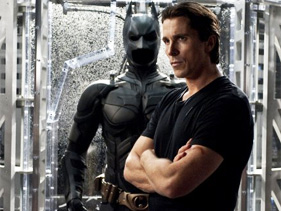
Director Christopher Nolan and stars Christian Bale, Joseph Gordon-Levitt and Gary Oldman will present the footage on Sunday, June 3. By Kara Warner Christian Bale in “The Dark Knight Rises” Photo: Warner Bros. Not to toot our own horn, but since their inception in 1991 the MTV Movie Awards have proven to be one of the hippest parties in town. Not only is the annual event a major draw for the who’s who in Hollywood, via the A-list nominees , presenters and performers, but there are always a few unexpected surprises and special sneak peeks from Hollywood’s most anticipated upcoming releases. We are proud to announce that this year’s live broadcast will feature the debut of exclusive new footage from one of the summer’s most highly anticipated movies, “The Dark Knight Rises.” And if that’s not exciting enough, the film’s writer/director Christopher Nolan and stars Christian Bale, Joseph Gordon-Levitt and Gary Oldman will be on hand to introduce the never-before-seen footage. If you’ve been following the news surrounding Nolan’s third and very likely final Batman film, you know that plot details have been kept under lock and key, so any chance to see anything new from the film ahead of its July 20 release is definitely cause for celebration. MTV also announced Thursday (May 24) that “Magic Mike” stars Channing Tatum and Matthew McConaughey have been added to the impressive lineup of presenters, which also includes: Adam Sandler, Emma Watson, Andy Samberg, Leighton Meester, Emma Watson, Logan Lerman, Ezra Miller, Emma Stone, Andrew Garfield, Kristen Stewart, Chris Hemsworth, Charlize Theron, Michael Fassbender, Mila Kunis and Mark Wahlberg. In addition, chart-topping indie-pop group fun. and rapper Wiz Khalifa are set to perform. MTV fans hold the “Power of the Popcorn” in their hands, with voting available online via MovieAwards.MTV.com through Saturday, June 2. As always, voting for Movie of the Year will remain open throughout the live show Sunday, June 3. Head over to MovieAwards.MTV.com to vote for your favorite flicks now! The 21st annual MTV Movie Awards air live Sunday, June 3, at 9 p.m. ET. Related Videos Get Psyched For ‘Dark Knight Rises’ Related Photos ‘Dark Knight Rises’ Final Trailer’s Key Scenes
Whenever I throw away one of those large round plastic lids from an orange-juice jug, in my head I hear my mother saying, as she would have said to my 8-year-old self, “That would make a great table-top for a doll’s house.” As an adult I don’t have a dollhouse, but I still have a hard time throwing away those orange-juice lids; the mentality dies hard. So why — with one luminous exception — can’t I love the movies of Wes Anderson, the most dollhousey of all filmmakers? Why, specifically, can’t I love Moonrise Kingdom , a sweet-natured picture set in 1965 on a mythical New Englandy island, in which two oddball kids run away together and pledge undying love? Moonrise Kingdom, like all of Anderson’s films, has been made with a master miniature-cabinetmaker’s care and specificity: It opens with what we might now call an Anderson special, a dollhouse-cutaway tracking shot that distills, in the space of a few minutes, the texture of one family’s life in their grand, ramshackle home. We see a bunch of little boys clustered around a mini record player (they’re spinning Benjamin Britten’s A Young Person’s Guide to the Orchestra , conducted by Leonard Bernstein), a distracted dad stomping around in madras pants (this would be that glorious deadpan peacock Bill Murray), a young girl who arrives from elsewhere in the house to sit near, yet apart from, her brothers, settling into a window seat with a book. There’s tension in that opening, as well as a sense of comfort: It turns out that the girl, Suzy (Kara Hayward) — a groovy nerdling in the making who loves François Hardy and has a collection of beloved library books she has failed to return — has been corresponding with a boy, whose faux-Boy Scout troop is stationed elsewhere on the island during this late-summer idyll. The boy, Sam (Jared Gilman), is an orphan who’s been bouncing from foster home to foster home, and he doesn’t fit in very well with his scout troop, either: Along with his badges he wears an ornate costume-jewelry brooch — it’s short a few scratchy pearls. For indiscernible yet understandable reasons, at least in the cruel logic of kids, the other boys don’t like him. He leaves a resignation letter for his ultra-conscientious Scout master (played earnestly and quite wonderfully by Edward Norton) and treks off to meet Suzy for the sojourn they’ve planned, an escape from all the grown-ups and kids who just can’t comprehend their weirdo world of wonder. That means, in this old Yankee version of The Blue Lagoon , that Sam and Suzy camp out on a deserted beach (where he makes earrings for her out of fish hooks and dead beetles; it’s a minor complication that her ears haven’t been pierced — yet). Eventually, there’s even a marriage of sorts, performed in the eyes of God and of Anderson regular Jason Schwartzman (as a disreputable but hardly heartless Scout master). It should all be so lovely, and yet… Anderson — who co-wrote the script with Roman Coppola — can’t forget for a minute how lovely it all is, and he reminds us with every detail: The aluminum ashtray into which Norton’s cigarette-smoking Scout Master Ward tips his ash; a record player that’s operated, impractically but wonderfully, by battery; Suzy’s shift dress, knee-sock and saddle-shoe getups, as if she were a ghost doomed to wear the perennial back-to-school outfit. These relics from a vanished childhood that we either lived or wish we’d lived are all designed to impart a shared intimacy, a response of “Oh! I remember that too!”, whether we actually remember it or not. And perhaps that’s why the picture’s exceedingly manicured quality works against it. All of Anderson’s pictures are stylized, and stylization is one of the great tools of moviemaking — its very broadness can capture nuances that naturalism fails to detect. But what’s the tipping point between “mannered” and “stylized”? Is a mannered movie simply a stylized one you don’t really like? Maybe. It could also be that most of the true emotion in Moonrise Kingdom exists in the world outside of the kids, a world Anderson dips into only occasionally: He shows us how the marriage between Suzy’s parents, played by Murray and Frances McDormand, is efficient yet frayed at the seams. (Oddly, and marvelously, the essence of this marital frustration is telegraphed best by a bit of shorthand dialogue from Murray, delivered as he grasps an axe in one hand and a bottle of whiskey in another.) The children, on the other hand, are relatively unformed and uncharismatic — they’re a little weird, a little cute, but they’re just not finished yet. They’re dream kids, too wispy to hold down a whole movie, and it’s not their fault. There are some wonderful things in Moonrise Kingdom : Bruce Willis plays yet another law-enforcement person with deep regrets, the kind of role he can do in his sleep and probably has, yet he infuses the performance with a cartoon melancholy that works — he’s the guy who’s never recovered from having an anvil dropped on his head. Alexandre Desplat provides a score that’s delicate where it needs to be and jaunty everywhere else. There’s a kiss that is, literally, electric. And the whole thing, shot by Anderson regular Robert Yeoman, looks characteristically gorgeous — its color palette is semi-psychedelic and dreamily pearlescent at the same time. So why can’t I love Moonrise Kingdom ? For all the movie’s technical meticulousness, the storytelling still has a wiggly-waggly quality, like a dangly loose tooth. In fact, while I appreciate the brashness of Rushmore , there is only one Wes Anderson movie I truly love, and I know I’m not alone: My informal investigations over the past few years have identified Fantastic Mr. Fox as the Wes Anderson Movie for People Who Hate Wes Anderson Movies. In addition to being a marvel of stop-motion animation, Fantastic Mr. Fox is joyous in trillions of unspoken ways — in the way the texture of the characters’ rangy fur changes in accordance with whatever they’re feeling at the time, in the way it finds such rapscallion pleasure in antiestablishment actions such as digging a tunnel into a rich fatcat’s storehouse. (I’m only just now realizing that Fantastic Mr. Fox was an unwitting precursor to Occupy Wall Street.) Maybe Anderson’s live-action movies don’t work as well because he’s asking real actors to do the work of puppets — human beings can’t help buckling beneath the thunderous burden of his precocious, overrefined ideas. And that’s Moonrise Kingdom in a tiny, mousebed nutshell: It’s oddly ambitious and weightless, a movie made with great care and, probably, love, that still sounds hollow when you thump it. Fantastic Mr. Fox explains why I want to save the orange-juice lids. Moonrise Kingdom explains why I steel myself and throw them away. Follow Stephanie Zacharek on Twitter . Follow Movieline on Twitter .
It would be very easy to show up here and report that Men in Black 3 has no reason to exist, that it’s just another threequel that didn’t have to be made. The truth is a little more complicated: Men in Black 3 — which was, like its two predecessors, directed by Barry Sonnenfeld — is neither as much fun as the first picture in the series nor as totally useless as the second. It has an actual story line, one that’s quite moving in places. And it features a bit of casting that’s pure genius. Men in Black 3 is almost good enough to make you care about its existence. And yet not quite. Will Smith and Tommy Lee Jones return as Agents J and K respectively, and their partnership is no more harmonious than it ever was: Agent J accuses K, quite justifiably, of barely being able to communicate on any human level. Agent K responds with yet more evasiveness: He’s a man of few words who appears to be carrying a great deal of baggage beneath his eyes alone. He has secrets, dammit, things that Agent J might be better off not knowing. Which makes Agent J that much more eager for some sort of connection with his partner-slash-father-figure. Meanwhile, Boris the Animal (Jemaine Clement, from Flight of the Conchords , doing his best Tim Curry imitation), a goggle-eyed alien villain whose dastardly plan was foiled years ago by Agent K — the episode also cost him an arm — escapes from prison with the goal of traveling back in time to kill Agent K before that arrest, and that arm-hacking, can happen. Simultaneously, Agent J wakes up in world where Agent K has been dead for years; he too travels back in time, to 1969, aiming to save the life of his taciturn hound dog of a partner, a guy who, as J aptly puts it, has “kind of a surly Elvis thing happening with him.” Outside of an early scene in which J and K show up at a Chinese restaurant to investigate a health-code violation that involves noodle dishes laced with alien eyeballs and such, Men in Black 3 is pretty low on the silly, clever creepie-crawlies that were the mainstay of the original. (The script is by Etan Cohen, based on the comic-book characters created by Lowell Cunningham.) And because this is a costly summer blockbuster, released in 3-D no less, its last third is cluttered with the usual manic action, which is undistinguished and unmemorable. But Men in Black 3 does have its charms, partly thanks to some first-rate second-banana players: The luminous Emma Thompson and the radiant Alice Eve play older and younger versions of the same character, and their presence helps tone down some of Will Smith’s unbearable “Love me!” rays. Jones is barely in the movie, but at least he makes an impact: It’s fascinating to look at his face, aging apace in the normal fashion — how has it gotten to the point that it’s such a wonderful thing to watch an actor grow into the face he was meant to have? But most wonderful of all is Josh Brolin as the young Agent K. It’s so easy to believe that Brolin could turn into Jones, given a couple of decades. Brolin mimics Jones’s phrasing perfectly, capturing the essence of his easy drawl, getting those Southern-fried pauses just right. His features even carry that half-worried, half-exasperated look that Jones’ Agent K has always worn so well. The plot of Men in Black 3, once you strip away the silly action and 3-D falderal, is relatively simple and straightforward, and even though, in essence, it’s not anything you haven’t seen before, it still manages to strike a semi-meaningful chord. Its effects, particularly a sequence that takes place near the very top of the Chrysler Building, atop one of those majestic art deco eagles, are reasonably impressive. But somehow, its actors end up mattering more. Is that a strength or a liability in a summer blockbuster? It ought to be the former, but these days, who can tell for sure? Follow Stephanie Zacharek on Twitter . Follow Movieline on Twitter .
The Intouchables hits so many audience-pleasing buttons, meticulously and dutifully, that it ought to be called The Irresistibles . This is the French movie you’ve been hearing about, a megahit in its native country and currently spreading across Europe like a cheerful, robust strain of flu. Based on a true story about a wheelchair-bound rich guy and his caretaker, a small-time crook from the projects, The Intouchables is a movie about life, love and the enduring power of Earth Wind & Fire. You have been forewarned. Actually, The Intouchables isn’t bad — its merely shameless, but at least it’s overtly so. The picture, written and directed by Eric Toledano and Olivier Nakache, stars François Cluzet as Philippe, the lonely wheelchair guy. Philippe is paralyzed from the neck down, the victim of a paragliding accident; he also lost his beloved wife years ago and is left with only a wiseacre teenage daughter who barely features in the story (she’s played, in a few fleeting, pouty scenes, by Alba Gaïa Kraghede Bellugi) and a houseful of servants, some of whom — like the super-efficient Yvonne (played by the earthbound and appealing Anne Le Ny) — seem to actually care for him. But Philippe also needs a strong, masculine caretaker, and when a strapping Senegalese fellow named Driss (Omar Sy) applies for the job, he’s hired almost against his own wishes. (He’d shown up for the interview at Philippe’s tony Paris mansionette only to get his papers signed, showing that he’d attempted to find work, in order to receive state benefits.) Philippe is an aesthete, a lover of fine art and classical music, and he has everything money can buy. But he needs a pal and a few laughs, as well as a companion who will treat him normally and not like a freak. When a concerned friend, suspicious of Driss and his motives, warns Philippe, “These street people have no pity,” Philippe responds firmly, “That’s what I want — no pity.” Driss, for his part, provides Philippe with more Live! Laugh! Love! moments than you or I could possibly count, despite the fact that he comes from a tough neighborhood and has some unresolved family troubles. And even though he steals a precious Fabergé egg — one with great sentimental value — from Philippe’s collection of same, the two form an indissoluble bond. Driss cheers Philippe up with his bad puns, he grins and/or dances infectiously whenever he hears “September” or “Boogie Wonderland,” and he helps Philippe court a new lady love. Philippe gradually loses his glum demeanor (Cluzet is really good at the glum stuff) and becomes guardedly cheerful, enjoying life for the first time in eons. Not much else happens in The Intouchables , though not much else needs to. The movie has the carefully calibrated inner workings of a watch movement: As it efficiently ticks away, it speaks to everything we want and need to believe about human frailty and the importance of connection. Toledano and Nakache keep the gears running smoothly — to their credit, they don’t throw in any moments of serious endangerment in order to up the drama quotient. (They were inspired to make the film after seeing a documentary about the real-life Philippe, Philippe Pozzo di Borgo, and his relationship with a man named Abdel, a young guy from the projects who came to work for him and changed his life around.) The friendship between Philippe and Driss, as the filmmakers present it, certainly is solid and life-changing, on both sides. I hesitate to use the term “magical Negro” because I think the term is too carelessly slapped onto any story in which white people learn something from people of color. Even in our racially mixed world — particularly here in the United States — the reality is that most white people live mostly around other white people, and sometimes it really does take an encounter with someone whose life, and whose skin color, is not like yours to shake things up. If you ask me, those encounters are less magical than they are necessary. That said, there is something a little magical about Driss, but that could be just because Sy is a charming, criminally likable presence. Sy has worked extensively in French movies and television, and he appeared in a previous feature made by Toledano and Nakache, the 2006 comedy Those Happy Days . (He also appeared in Jean-Pierre Jeunet’s 2009 whimsical windup toy Micmacs .) Sy makes The Intouchables worth watching, not because he adequately fulfills any perceived notion of the joyful person of color, but because he quite simply seems filled with joy. He earns bonus points for maintaining such boundless joie de vivre even as he spends so much time hanging around a French sourpuss like Cluzet’s Philippe. The Intouchables is not particularly complex, but it certainly hits its target. Whether or not you want that target hit is up to you. Meanwhile, Sy’s performance almost makes you forget how calculated the whole thing is. Plus, Driss is damn right about Earth Wind & Fire. Follow Stephanie Zacharek on Twitter . Follow Movieline on Twitter .
Because we’re a little more than two weeks away from the opening of Prometheus , and because the Film Society of Lincoln Center opens its complete, week-long retrospective of his films this Friday in New York, because it’s a quiet morning otherwise and because it’s gone so well with other directors in the past , let’s rank the 19 feature films of Ridley Scott. The order is obvious: [NOTE: Scott’s ” Final Cut ” of Blade Runner and ” Director’s Cut ” of Kingdom of Heaven are considered herein.] 19. A Good Year 18. G.I. Jane 17. 1492: Conquest of Paradise 16. Robin Hood 15. Body of Lies 14. Hannibal 13. Matchstick Men 12. White Squall 11. Black Rain 10. The Duellists 9. Legend 8. Someone to Watch Over Me 7. Kingdom of Heaven 6. Black Hawk Down 5. Blade Runner 4. Thelma & Louise 3. Gladiator 2. American Gangster 1. Alien Follow S.T. VanAirsdale on Twitter . Follow Movieline on Twitter .
Pop star Kylie Minogue is in Cannes, and she’s showcasing a career move: Starring in a film. Not just any film mind you, but Leos Carax’s Holy Motors , which attendees here are calling the wackiest selection to hit the festival in years, a pretty amazing feat. With cyber-monsters, talking machines and a story that is a complete trip, Minogue plays two characters in Carax’s tale, which centers on Monsieur Oscar — who himself is in fact many characters: a captain of industry, assassin, beggar, monster, family man and a half-dozen more. Taking on the role, Minogue said she decided to shed some of her persona and that she was thrilled to be in Cannes. “It feels like a dream to have a film here in Cannes and to be welcomed into this family with Leos,” she said Wednesday afternoon. “My involvement was deep and emotional and fun. I banned my entourage of coming with me. I stripped myself of ‘Kylie’ and wanted to be a blank canvas for Leos.” In Holy Motors , Monsieur Oscar (Denis Lavant) journeys from one role to the next, accompanied by Céline (Edith Scob), the woman driving a massive engine that transports him through Paris. He’s a “conscientious assassin,” going from one place to the next in pursuit of a mysterious driving force and the women and spirits of past lives. “I pass bridges every day and this old gypsy woman with her bag; for years I’ve passed these women and rarely given money,” Carax said, adding, “So I thought there is no way to communicate with this woman — there is no way. So I’d imagine myself slipping into a café and changing into old woman clothes and becoming that woman and that’s how this whole story started.” Carax and Minogue met a year ago through their mutual friend, the French filmmaker Claire Denis, and the two decided to collaborate. The former Australian soap star’s return to acting, however, was not entirely devoid of her current day (or night) job as a world-famous pop star. Carax gave her the chance to sing in the film and do it in a very unconventional way — at least for movies. “Obviously I’m used to a pop music world,” she said. “There was a song in the movie and I thought we’d record it, but Leos said, ‘No, let’s do it live in a scene.’ I don’t think that happens much in movies, and it was amazing for me. It combined both worlds and it was just fantastic.” Continuing, Minogue noted: “For me it was entirely exciting to step into this unknown situation. That doesn’t mean I wasn’t slightly terrified, but I was more than happy to venture into this strange experience.” Read more of Movieline’s Cannes 2012 coverage here .
Glee star Jane Lynch narrates a new documentary about LGBT rights in America, featuring a candid interview with President Obama and doubling as a de facto campaign ad for the reelection-seeking Commander-in-Chief in 2012. The documentary-style commercial highlights Obama’s achievements over the past three years, most notably ending the military’s Don’t Ask Don’t Tell policy and most recently coming out with full support for same-sex marriage . The Prez even name-checks Lady Gaga . Check it out below: President Obama and the Fight for LGBT Rights Ad
My cover of “Boyfriend” by Justin Bieber. Enjoy! Facebook: www.facebook.com Twitter: www.twitter.com Online Merch Store: www.tannerpatrick.bigcartel.com Tumblr www.tannerpatrick.tumblr.com Filmed by Madeline Becker Edited by: Tanner Patrick Recorded and Produced by: Tanner Patrick “Boyfriend” Lyrics: If I was your boyfriend, I’d never let you go I can take you places you ain’t never been before Baby take a chance or you’ll never ever know I got money in my hands that I’d really like to blow Swag swag swag, on you Chillin by the fire while we eatin’ fondue I don’t know about me but I know about you So say hello to falsetto in three two swag I’d like to be everything you want Hey girl, let me talk to you If I was your boyfriend, I’d never let you go Keep you on my arm girl, you’d never be alone I can be a gentleman, anything you want If I was your boyfriend, I’d never let you go, I’d never let you go Tell me what you like yeah tell me what you don’t I could be your Buzz Lightyear fly across the globe I don’t ever wanna fight yeah, you already know Imma make you shine bright like you’re laying in the snow Burr Girlfriend, girlfriend, you could be my girlfriend You could be my girlfriend until the —- world ends Make you dance do a spin and a twirl and Voice going crazy on this hook like a whirl wind Swaggie I’d like to be everything you want Hey girl, let me talk to you If I was your boyfriend, I’d never let you go Keep you on my arm girl you’d never be alone I can be a … http://www.youtube.com/v/q3yv5pP5Y8g?version=3&f=videos&app=youtube_gdata Read the rest here: “Boyfriend” – Justin Bieber Cover by Tanner Patrick – with lyrics