Tag Archives: Street

Hollywood Ink: Does Lego: The Movie Have Cloudy Future?

Pill Went From ‘Zero To 60’ To Become ‘Hottest Breakthrough MCs Of 2010’ Candidate

Fans decide our ‘Hottest Breakthrough MC of 2010′ — vote now! The winner will be revealed on July 25. By Shaheem Reid Phil Photo: Warner Bros. “Hottest Breakthrough MCs of 2010” Candidate: Pill Fourteen months ago, Pill had the trap going ham for his street pharmaceuticals. The young rapper struck gold when he dropped his rugged video for “Trap Goin’ Ham.” Rapping with a Corona in his hand, he showed women in his neighborhood smoking Newports and dudes rolling blunts. It was uncut, real and raw, and it gave you a flashback to that unflinching peak of ATL when some of the greats, such as Outkast and T.I., showed their lives in Georgia. Since then, Pill has become a favorite of hip-hop bloggers with his mixtapes 4180: The Prescription, 4075: The Refill and 1140: The Overdose. “It’s surreal, man. When you start off, you hope you can make it to this place,” Pill said of his growing popularity. ” 4180 was my first solo project ever. I went from zero to 60.” With that trilogy done, Pill is working on a brand-new tape, sans the medicinal theme, with DJ Holiday and the Empire. His debut LP should be dropping sometime in the fourth quarter or top of 2011. ” The Medicine, I’m working on it. I wanna make sure I don’t rush it. Once you get the deal, you feel like, ‘I gotta drop the album,’ ” Pill said. “I wanna make sure everything is new, everything is fresh. I got music for it. But I just wanna make sure all the feelings I go through, all the experiences, I wanna incorporate everything. Look forward to The Medicine. Not too many features. I don’t wanna crowd my first album with a bunch of features and make it a compilation CD. I want it to be more of me giving the people who I am and letting them see where I come from and hear my testimony.” Although the album is still being recorded, Pill said he has a keeper. It’s one of his most personal projects yet. ” ‘A Song for My Momma,’ ” Pill said when asked about a must-hear on his LP. “My momma passed away. I went in the studio, and I had been so stressed that week. That night, I was out clubbing, and I got a little tipsy. I was in New York. When I got back, I burst into tears. It caught up with me. I was like, ‘Damn, I’m actually doing what I told my momma I was gonna do.’ It was like, ‘Man, I gotta make her a song.’ I was supposed to make her a song, and I been running from it. I knew it was gonna take a lot of emotion and pain to do it. So when I got to the studio, I was boo-hooing still. My pages [that I write my rhymes on] was wet up, but I got through it.” Pill and 19 other up-and-coming MCs are in the running to become MTV News’ “Hottest Breakthrough MC of 2010” — and the winner will be decided by you! Cast your vote for the “Hottest Breakthrough MC of 2010” right here . The top five will be revealed beginning July 19, and the winner will be announced on the “Sucker Free Summit” July 25!

Read more here:
Pill Went From ‘Zero To 60’ To Become ‘Hottest Breakthrough MCs Of 2010’ Candidate

Jon Stewart Asks David Axelrod: Has This Government Proven Itself Competent Enough To Regulate Industry?

Jon Stewart on Monday asked David Axelrod a truly extraordinary question: has this government proven itself competent enough to regulate industry? Speaking to President Obama’s senior advisor on “The Daily Show,” the Comedy Central star was in the middle of a rather interesting discussion when he surprisingly said, “It’s clear that this administration believes that government can have a stronger hand in regulating Wall Street, in regulating energy, in doing these things.” “But, has government during this time proved itself competent? And are our only two choices sort of an incompetent bureaucracy that doesn’t quite regulate properly or free market anarchy?” he asked. When Axelrod predictably tried to blame all the problems in the country on the previous administration’s supposed lack of regulation and oversight, Stewart wasn’t having any of it (video follows with transcript and commentary):  JON STEWART, HOST: It’s clear that this administration believes that government can have a stronger hand in regulating Wall Street, in regulating energy, in doing these things. But, has government during this time proved itself competent? And are our only two choices sort of an incompetent bureaucracy that doesn’t quite regulate properly or free market anarchy? Before you can make the case that this administration and government can effectively regulate shouldn’t they, you know, the MMS case makes a pretty clear point that the regulatory system is somewhat broken, and you guys had a chance to… DAVID AXELROD, SENIOR OBAMA ADVISOR: The answer Jon is not to abandon the notion that there have to be rules and oversight. The answer is to make it, to make it work better. There’s a long legacy there at MMS, and frankly at other agencies of government because the last administration wasn’t really interested in regulating. STEWART: But why then, why not then go in and really, with the urgency? You know, the fear is the government is not agile enough, is not urgent enough to deal with things like a catastrophic oil spill. AXELROD: There is, there is no doubt that in retrospect we would have liked to move faster on the MMS situation, but understand that we were also dealing with the economic crisis, and, and, and, and, and the wars, and a whole range of issues, and we, that was, that was a defect that we’re correcting and moving aggressively to correct now. But the answer isn’t to walk away from it. I think we tested the proposition of what no regulation means. What you get, you get the leak, you get the mine disaster in West Virginia, and you get an economic crisis. And everybody recognizes that government has to play a role. It shouldn’t be an oppressive role, but there has to be some firm oversight and some rules of people respond to. These, you know, it’s pretty clear the oil industry is not going to regulate itself. STEWART: But do you think, I guess my point is before you have the opportunity, before you can earn the ability to go in and, and, and do that, don’t, don’t we have to show a certain baseline level of competence. Wait until you hear what Axelrod used as an example of the Obama administration’s competence:  AXELROD: Yeah, well I mean, I would argue that we have shown a baseline level of competence. The thing is that when you show a level of competence, it doesn’t become a story. It only becomes a story when there are problems. Take the H1N1 flu for example. We jumped on that quickly. Some people criticized us for being too aggressive on it, but I think we averted a larger public health disaster. Yeah, they sure did a GREAT job with that swine flu scaring the heck out of people over what turned out to be nothing just like in the 70s. If that’s what this White House considers competence, we’re REALLY in trouble. As for Stewart, that’s one heckuva good job by a comedian. Makes the clowns at MSNBC look like the real jokers, doesn’t it?  What really made this so marvelous is that he went in a direction most journalists today would eschew at all costs. Consider that today’s liberal media members view industry as the enemy that needs to be vigorously constrained by government, but they never ask if government is competent enough to do it.  Obviously this oil spill has to raise some uncertainty in this regard, and Stewart marvelously challenged a senior administration official to explain why this White House is up to the task.   On the other hand, he better be careful with this line of questioning or he just might get thrown off the liberal reservation as Keith Olbermann recently was when he dared criticize Obama.  Maybe that would be a good thing for Stewart who then would really be free to ask the questions of this administration most so-called journalists won’t. A man can dream, can’t he? 

Here is the original post:
Jon Stewart Asks David Axelrod: Has This Government Proven Itself Competent Enough To Regulate Industry?

Oliver Stone Lauds Hugo Chavez, Criticizes Action Against Iran on ABC’s GMA

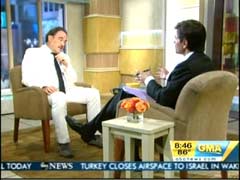
Liberal director Oliver Stone revealed his anti-American bent on Monday’s Good Morning America, praising the rise of mainly left-wing leaders across South America and even went so far to support Brazilian President Lula da Silva for “trying to strike to deal with Iran,” wildly predicting ” it’s going to be like North Vietnam again ” if the U.S. pursued sanctions against the country. Anchor George Stephanopoulos interviewed the Oscar-winning director 44 minutes into the 8 am Eastern hour. Stephanopoulos referenced how Stone has “tackled war, Wall Street, and the Kennedy assassination” and is now “taking on South America. He says our neighbors to the south haven’t gotten a fair shake from the American media, and, armed with a camera, he’s set out on a road trip to try to change that.” Before asking about Chavez, Stephanopoulos played a clip from Stone’s documentary “South of the Border,” which included a sound bite from CNN’s John Roberts that gave the impression that the anchor was condemning the Venezuelan leader: “He’s more dangerous than Bin Laden, and the effects of Chavez, his war against America, could eclipse those of 9/11.” Actually, Roberts, in the January 15, 2009 segment from his American Morning program, actually was reading a quote from a book by his guest, Doug Schoen: “Right off the bat, in the very front of the book, you quote Otto Reich, who was the former ambassador to Venezuela back in the 1980s, as saying that he’s more dangerous than bin Laden and the effects of Chavez, his war against America could eclipse those of 9/11.” Earlier, the ABC anchor asked, “Why take this on?” The director characterized the left-wing trend in leaders in South America as a “march towards reform” and praised these favorite leaders on the continent without naming them: STONE: They have democratically-elected leaders who look like the people who elected them. They have a priest in Paraguay. They have a woman in Argentina. They have an Indian leader- the first Indian- in Bolivia. They have an economist in Ecuador and they have a soldier who’s poor- comes from a poor family- who was elected three times in Venezuela- that’s Hugo Chavez. These are good people. When you look in their eyes, you see it, and you see it on film. That’s why you have to do a  film because on paper, it sometimes it didn’t come across, you know? The leader of Paraguay, Fernando Lugo, is actually a former Catholic bishop who admitted that he fathered a child with a woman in her 20s when he was still a bishop. Lugo led a mainly left-wing coalition into office when he was elected in 2008. Argentina’s president, Cristina Fernandez de Kirchner, nationalized $30 billion in private pension funds late in 2008. Bolivian President Evo Morales and Ecuador’s executive, Rafael Correa , are both avowed socialists. The ABC anchor later pressed the director on his endorsement of his Venezuelan “soldier:” STEPHANOPOULOS (live): Do you believe Hugo Chavez is a good person? STONE: Yes, I do- absolutely . STEPHANOPOULOS: But even the United Nations has said that Hugo Chavez has not been a paragon of free speech- his crackdown on the media in his own country. STONE: I have not seen that report. I know that- you know, there’s no pattern of censorship in this country . I’ve been there. So, you can see it. You can go down to South America, spend three days, and you’ll see the most vibrant opposition in the world . STEPHANOPOULOS: One of the reasons the United States has put a lot of pressure on Chavez is over oil, you believe, and there was particular opposition from the Bush administration. How do you think the relationship may change, now that President Obama is in office? STONE: Well, I hope it changes because America seems to want to control every oil-producing nation in the world, whether it’s Iraq or Iran or Venezuela. Since Stone named Iran, Stephanopoulos mentioned how “the president of Brazil [is] trying to strike a deal with Iran, counter to what the Obama administration is looking for.” The director replied that this move as a ” good thing .” When the anchor asked why, Stone made his “North Vietnam” comparison: STONE: Because- well, the march to sanctions in Iran. We want sanctions. We want- it seems to me, once they start intercepting their ships, we’re going to be in a- it’s going to be like North Vietnam again. We’re going to get into a position where we’re going to get closer to war. There’s no reason for to us go to war in Iran, any more than there was a reason to go in Iraq – STEPHANOPOULOS: Even if they want to build a nuclear weapon? STONE: Hmm? STEPHANOPOULOS: Even if they want to build a nuclear weapon? STONE: I think that has to be discussed. So the Oscar winner not only acted as a left-wing apologist but also vouched for inaction against a nation who has nuclear ambitions and has made threats against its neighbors. Stephanopoulos and Stone concluded by briefly discussing how the director was also releasing a sequel to his acclaimed 1987 movie, “Wall Street.” After thanking his guest, the ABC anchor noted that “‘South of the Border’ is open in New York now” as a title graphic for the movie flashed on screen. But, in a parallel to Stone’s edit of Roberts, the graphic that ABC used for the movie was actually cropped from its movie poster which emulated left-wing propaganda art . Eagle’s talons represented United States’s power in South America on the poster, which were mounted on top of South America which was appropriately painted red.
See more here:
Oliver Stone Lauds Hugo Chavez, Criticizes Action Against Iran on ABC’s GMA

Al Gore’s Current TV Is Struggling

Andrew Wallenstein at The Hollywood Reporter  suggests more than Al Gore’s marriage is crumbling. Gore’s cable channel Current TV is facing a dramatic makeover with an injection of MTV executives. Wallenstein tried to sugarcoat the inconvenient truths: For all the brilliance he has displayed grasping the meteorological dynamics governing the globe, Gore has miscalculated those of a slightly less complex world: the TV business. The radical ambitions he brought to the environment didn’t pan out the same way in cable; the television will not be revolutionized. Gore tried to sell off Current to his Google pals for half a billion dollars, but that didn’t take. So they’re taking the content away from small-d democracy and toward the persistent formula of other youth-culture channels, loaded with young-skewing documentaries and “reality” TV: For much of the past year, Current TV has been quietly undergoing an overhaul that will change just about everything but the struggling channel’s name. Current declined comment for this story. It’s a revitalization project Gore & Co. embarked on after exhausting a more lucrative possibility: selling the channel. Current’s founding partner, Joel Hyatt, spent much of 2009 shopping the network with a price tag that wildly overestimated the company’s worth, confirmed sources at several conglomerates. Current even had extensive sale talks as far back as 2007 with Google, where Gore serves as a senior advisor. Now the focus has shifted to fixing Current, perhaps with an eye toward a sale down the road. Last July, Hyatt was replaced as CEO by Mark Rosenthal, the former MTV Networks COO who is rebuilding the channel in the traditional mold Gore avowed to avoid, only to suffer the consequences. Rosenthal has brought in a crew of colleagues from his MTVN days including an unlikely ringer: Brian Graden, the programming genius who masterminded hit series from “South Park” to “The Osbournes,” before leaving last year. He’s on retainer as a consultant. Graden helped found the gay channel Logo and expressed joy last year at bringing documentaries to MTV with titles like “I’m Changing My Sex” and “I Work In the Sex Industry.” So here’s where the format change comes in: Forget bite-sized clips created by anonymous viewers; the new Current will consist of full-length series from the usual suspects in unscripted production who are getting the word that Current is open for business…. Several senior MTVN colleagues were brought in as consultants to engineer the turnaround including Hank Close, formerly president of ad sales. Several more key full-time hires have been made as well. But original programming is at the heart of any successful cable network, and for that he’s turned to Graden, who’s known for his knack for hits. Graden and Current make for an unusual combination. A network that has devoted significant time to serious topics ranging from AIDS in Africa to New Age spirituality is in the hands of Graden, who didn’t exactly win Peabodys for shows often criticized for corrupting America’s youth. Graden did not respond to an email seeking comment. The MTV infusion at Current is ironic considering the channel is essentially facing the same fundamental problem MTV confronted so successfully in the 1990s: a TV schedule comprised of multi-minute clips is far less advertising-friendly than the half-hours that ensure viewer tune-in isn’t so erratic. In other words, MTV “so successfully in the 1990s” dumped all the music videos in favor of “The Real World” ad infinitum, et cetera. [HT: Dan Isett]

The rest is here:
Al Gore’s Current TV Is Struggling

Geithner Miscasts the 1930s at the G-20 Summit; AP’s Aversa Lets Him Get Away With It

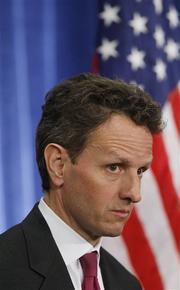
Treasury Secretary Tim Geithner is admonishing the leaders of other countries attending the G-20 summit in Toronto to keep spending like there’s no tomorrow, because if they spend like there’s no tomorrow, there will still be a tomorrow. But in the gospel according to Geithner, if they don’t spend like there’s no tomorrow, there really won’t be a tomorrow. With such blubbery logic, is it any wonder that America’s stature with the rest of the world is plummeting? Earlier this evening, Brent Baker at NewsBusters pointed to an ABC report warning that a second recession might be on the horizon if the G20 nations don’t follow the spend-spend-spend recommendations of the Obama administration. In his attempt to convince the rest of the world of the folly of being fiscally responsible, Geithner has invoked a supposed “lesson” from the 1930s. Back in mid-May, I happened to stumble on the fundamental untruth of his assertion, and will demonstrate it shortly. The Associated Press’s Jeannine Aversa let Geithner’s contention pass without challenge in her Saturday report on the summit. Here are the three relevant paragraphs from her report: Asked if the global economy could slip back into another “double dip” recession, Geithner said the answer to that question hinges on decisions made by world leaders. “It is within the capacity of the people who are going to be in those rooms together in the next few days to avoid that outcome,” he said. One of the mistakes made in the 1930s was that countries pulled back their recovery efforts too soon, prolonging the Great Depression, he said. Geithner said the United States doesn’t want to see that happen again. “What we want to do is continue to emphasize that we are going to avoid that mistake,” he said. “It’s only been a year since the world economy stopped collapsing … it will take some time to heal.” What follows is a chart showing U.S. spending and GDP from 1923 to 1940, with a partial list of unemployment rates from roughly the same time frame immediately to its right: Hoover began the federal spending ramp-up in 1931 and 1932, but Franklin Delano Roosevelt and his New Deal took spending as a percentage of gross domestic product (GDP) to the 9, well over double the level of the Coolidge years. He kept it there until 1940, after which pre-war and wartime spending kicked in. Despite all of what FDR did and tried, unemployment stayed persistently and unacceptably high. The gospel according to Geithner, as well as hard-core Keynesians like Paul Krugman at the New York Times, would tell us that FDR held up his end of the bargain by keeping the spending spigots open during the eight years that ended in 1940, and that it was the Europeans pulling back who prolonged the recession (Krugman even believes that FDR didn’t spend enough). One would therefore expect that folks living in countries that didn’t hold up their end of the spend-spend-spend bargain during that decade must have endured even more hardships than U.S. citizens did. The trouble is, as I discovered quite by accident on May 13, is that this isn’t at all what happened. In a Wall Street Journal column , Daniel Henninger quoted an eminent European economist who had passed away less than two years earlier. In the process of making a point that Henninger used about the mediocre performance of Europe during the 1990s, this historian also, when seen in the context of the graphics just presented, also made a huge point about the Europe of the 1930s: Angus Maddison, the eminent European historian of world economic development who died days before Europe’s debt crisis, wrote in 2001: “The most disturbing aspect of West European performance since 1973 has been the staggering rise in unemployment. In 1994-8 the average level was nearly 11% of the labor force. This is higher than the depressed years of the 1930s.” Whoa. Maddison’s assertion leads to these key factoids and points: Europe’s unemployment during the 1930s seldom if ever topped 11%. U.S. unemployment during the 1930s was always above Europe’s level by a few points; another source I found indicates that U.S. unemployment at one point dropped to about 12% in 1937 , but the point still stands. Europe’s “failure” to spend as Geithner thinks it should have during the 1930s doesn’t seem to have hurt it nearly as much as FDR’s insistence on continued spending hurt us. If there’s a lesson here, it’s that, absent contrary evidence, Tim Geithner is wrong and the Europeans of the 1930s were right. It would also seem that Europe’s renewed intent to rein in government spending is a wiser course than the spend-spend-spend strategy of the Obama administration (how serious the European countries are about restraining spending remains to be seen; if Europe tries to solve its problem primarily with tax increases, all bets are off). Jeannine Aversa’s relay of Geithner’s more than likely false assertion about the 1930s deserved much more skepticism that it received. Cross-posted at BizzyBlog.com .

More here:
Geithner Miscasts the 1930s at the G-20 Summit; AP’s Aversa Lets Him Get Away With It

Slow Joe Biden’s Subpar Saturday: Part 2 — The Slippery Growth Assertion

As pathetic as Joe Biden’s thin-skinned “Why do you have to be such a smart-a**” comment to a Milwaukee-area custard shop manager was yesterday (covered at NewsBusters ; at BizzyBlog ), it wasn’t even the Vice President’s worst Wisconsin Saturday moment. A far worse moment, in terms of familiarity with the truth, occurred as Biden rewrote history and unilaterally revised economic growth upward in a speech to Democrats in support of Senator Russ Feingold’s reelection. In a CBS News online report by Stephanie Condon that I suspect will not make it to the airwaves Biden was dour and downbeat, while misstating economic reality: Biden: We Can’t Recover All the Jobs Lost Vice President Joe Biden gave a stark assessment of the economy today, telling an audience of supporters, “there’s no possibility to restore 8 million jobs lost in the Great Recession.” Appearing at a fundraiser with Sen. Russ Feingold (D-Wisc.) in Milwaukee, the vice president remarked that by the time he and President Obama took office in 2008, the gross domestic product had shrunk and hundreds of thousands of jobs had been lost. “We inherited a godawful mess,” he said, adding there was “no way to regenerate $3 trillion that was lost. Not misplaced, lost.” … Biden said today the economy is improving and noted that in the past four quarters, there has been 4 percent growth in the economy. Over the last five months, more than 500,000 private sector jobs were created. I have no idea how Biden arrived at his $3 trillion figure; I’m guessing Ms. Condon doesn’t either. One very minor error: The Vice President’s claim that “more than 500,000 private sector jobs were created” is false, but barely. On a seasonally adjusted basis, it’s 495,000, per the Bureau of Labor Statistics. The big error: GDP growth has been nowhere near 4% during the past four quarters, no matter how you define “the past four quarters” (compounding was ignored for simplicity’s sake): The 2.5% estimate for 2Q10 is based on the assertion in this Friday Associated Press report that “Economists expect slower growth ahead” from 1Q10’s annualized 2.7%. Biden’s economic growth assertion is nowhere near true no matter how one interprets it. If 2Q10 growth comes in at an annualized 5.5% or higher, readers can come back and crow that Biden was really right. Good luck with that. Stephanie Condon should have known better than to blindly relay Biden’s false assertion. Does anyone else besides me think that she would have checked it out if Dick Cheney had said it instead? Photo at top right is at CBS link via AP. Cross-posted at BizzyBlog.com .

See more here:
Slow Joe Biden’s Subpar Saturday: Part 2 — The Slippery Growth Assertion

MSNBC’s Dylan Ratigan Urges Homeowners to Stop Paying Mortgages As a Leftist Protest

MSNBC afternoon host Dylan Ratigan took to the ramparts of The Huffington Post on Thursday and urged home owners to stop paying their mortgages as a leftist protest against a government too cozy with the bankers. The title was “They Keep Stealing — Why Keep Paying?”    The crisis was all Wall Street’s fault, and now they’re back to paying themselves bonuses after a federal bailout. So stop paying them. (Notice Ratigan doesn’t suggest you protest Washington and TARP by refusing to pay your taxes.) This piece sounds like a direct-mail letter: You didn’t cause this mess. They did. Now you are struggling to make the same payments on this mortgage on your now overpriced home even in light of a crashing economy and massive deflation, all while the government does everything in its power to help Wall St. keep the bonuses coming. Well, it is becoming time to take matters into your own hands… I suggest that you call your lender and tell them if they don’t lower you mortgage by at least 20%, you are walking away. And if they don’t agree, you need to consider walking away. It probably doesn’t feel right to you. That is because you probably are a good person. But your mortgage is a business deal, and it is not immoral to walk away from a business deal unless you went in to the deal with the intention of defaulting . But somehow, even though the corporations are pumped to exercise their new rights, former bankers like Henry Paulson, current ones like Jamie Dimon and — get this — now even Fannie Mae execs want to keep you from exercising your rights. But before you let them (or anyone commenting below) force you into paying that $500k mortgage on a $300k house, ask them if they’ll push Jerry Speyer into “honoring his obligation” by breaking into his $2 billion personal piggy-bank to keep paying for Stuyvesant Town? Or how about asking Hank and Jamie to lecture fellow bailed-out CEO John Mack about how “you’re supposed to meet your obligations, not run from them”? Maybe make him use some of his $50+ million for those buildings he bought in San Francisco? And before shaming and punishing American homeowners, did they nag Steve Feinberg about helping “teach the American people…not to run away” by writing a check out of his billion-dollar pocket to cover all the stiffed landlords and vendors at Mervyn’s? After all, at least you aren’t single-handedly putting 1,100 employees out of work when you walk on your mortgage. As part of the deal for your house, your mortgage holder gets interest payments from you and they also use the note to your house for their capital reserves. In return, they take the risk of a foreclosure. In many states, you paid extra to have a non-recourse loan where the lender just gets the house back if you stop paying — your interest rate would’ve been much lower if you were held personally liable like a student loan. But if you still feel bad, then donate the money saved to charity instead of to their bonuses. Even if you agreed that everyone on Wall Street is a knave and a thief, Ratigan is still preaching that two wrongs make a right. Or, to be more precise, the second wrong helps the populist agitators regain “our captured government” from the financial elite. (Did he clear that phrase with Chris Matthews, because it sounds “dangerously anti-government,” doesn’t it?) Meanwhile, our captured government has made it clear that they want to further reward these banksters because there are clearly better ways to “save” the economy without rewarding those most responsible for the damage. Instead of claw backs for the past theft and strong financial reform for the future, they choose to cover-up the gross misuse of our tax money, making our country worse by helping the criminals on the backs of the most honest. But thankfully, in this country we still have the tools to fight back and regain our country. Our vote, our voice, our laws and what we choose to do with every penny we have that doesn’t go to taxes are the benefits of our hard-fought freedom, and in this battle we must use them all to fight back. It’s time for the citizens to once again own this place. [HT: Jack Coleman]

Visit link:
MSNBC’s Dylan Ratigan Urges Homeowners to Stop Paying Mortgages As a Leftist Protest

Wall Street Tabloid Asks CNBC Anchor ‘How Does It Feel To Be A MILF?’

The editor of the Wall Street e-tabloid Dealbreaker on Wednesday actually asked CNBC anchor Trish Regan, “How does it feel to be classified as a MILF?” For those unfamiliar with the term — as was Regan! — it means “Mom I’d Like to,” well, let’s say have sex with. Nice thing to ask an Emmy-nominated 37-year-old mother of two, wouldn’t you agree? Yet that wasn’t even the worst of Bess Levin’s questions (Levin in bold, h/t TVNewser ): Question number 2: How do you feel you measured up next to Mandy and her assets? I think I held my own. For those that don’t watch CNBC, Amanda Drury was originally brought over from CNBC Asia to fill in for Melissa Francis who was going on maternity leave. When Levin asked about Mandy’s “assets,” she wasn’t referring to her stock portfolio if you catch my drift. As such, Regan was being questioned about how her bra size compared with Drury’s. Seem a little childish to you? Wait. It gets worse:  Question number 3: If you had to: Charlie Gasparino or Dennis Kneale? Killing yourself is not an acceptable answer. I think I would have to kill myself. Or be on life-support. And then? Who would it be? You think it would still be appealing for them? Dennis Kneale and Charlie Gasparino? Yes, one of them would definitely still go for it, if not both. Question number 4: Just so we can be fair, in that same vein, if you had to get down and dirty with one of the anchorettes on CNBC, whom would you choose? See this question is just as hard as the last but for the opposite reason. I’m not into women but if I were it would be really difficult. We have a lot of beautiful ladies at CNBC. Add it all up, and Regan was asked: how she feels about young men wanting to have sex with her; which guy on her network she’d like to have sex with, and; which woman.  All of this raises a number of questions such as what is this Dealbreaker, and why would a serious journalist want to have anything to do with it? Fortunately, fashion magazine Elle did an article on Levin in April offering us some insights: The 25-year-old editor of Dealbreaker.com, the financial industry’s online tabloid that reports on corporate scandals and insider gossip, some of which she overhears at happy hour in the finance world’s watering holes, has become a mustread on Wall Street. Posting nine times a day, she’s been known to scoop the mainstream business media and retains a fiercely loyal following who seem to have an infinite appetite for her biting, off-kilter commentary about the money business- you don’t see The Wall Street Journal running headlines like “Neil Barofsky Will Cut a Bitch” or “Spotted: Ruth Madoff Getting Her Tan On.” Dealbreaker, which draws 300,000 unique visitors a month, has posted hedge funds’ for-investor-eyes-only marketing materials, which three years ago sparked a lawsuit that named Levin and Dealbreaker’s publisher; they later settled. During the Bank of America and Merrill Lynch merger last year, Merrill employees depended on Levin to report what their company wasn’t telling them.  The New York Observer recently wrote of Levin: Because of someone else’s car accident and a physics-class coincidence, Bess Levin is the most important young Wall Street blogger in the country. But Dealbreaker has a certain crackle-a taste for picking out and serving up the day’s fascinating little nuggets of finance news. It’s a must-read.  John Friedman wrote about Levin earlier this month: Levin, at only 25 years old, is reputed to be the scourge of Wall Street. Clearly, she gets a kick out of poking holes in the pompous image of Wall Street professionals, to the delight of journalists who don’t have the same cleverness — or freedom — to write like her. The media universe embraces Levin as a symbol of the Really New Journalism (sorry, Tom Wolfe), someone whose job description is to lampoon the establishment and entertain the masses with both biting and good-natured sarcasm. Levin has a knack for writing irreverent, witty and insightful stuff. But what makes proudly hard-bitten journalists look at her in something approaching awe is her precocious age. Levin is not too far removed from attending Amherst College or, even high school in suburban New Jersey. That seems like part of the attraction. But Friedman made a more salient observation: Much of Levin’s success results from the states of the journalism and Wall Street landscapes. The rise of the Internet has attracted a large number of young readers who would sooner dig a ditch than buy a newspaper or a magazine at a newsstand. This situation has forced the nation’s once-stodgy media companies to dig deep to tape [sic] young, adventurous writers, who are at home on the Web and can communicate with their peers. Which likely explains the need for the tawdry, but why would someone like Regan, who just gave birth to twin daughters, want to associate with someone who views her website’s approach as “Wall Street torture porn?” It’s certainly not for the exposure, as despite Elle’s fawning, 300,000 unique reads a month is nothing; NewsBusters typically does over 5 million. As for the whole peer thing, one doesn’t imagine Regan at 37, and a member of the Council on Foreign Relations, views Levin as her contemporary. With this in mind, although Dealbreaker devotees might have loved these sex-related questions — according to Levin, they came from readers — I’m having a hard time understanding why the seemingly conservative Regan put herself in this position. Isn’t this degrading to women looking to be taken seriously in the business world and not be treated as sex objects? Or is this the state of modern feminism?   As for Levin, who clearly must be doing something right given her glowing reviews, one has to wonder why someone of her intellectual capacity feels the need to occasionally wander into the gutter. If she really has the eyes and ears of hedge fund managers and financial sector CEOs, can’t she keep their attention without the smut?  As the father of a sixteen-year-old girl, I certainly hope so. 

Read more:
Wall Street Tabloid Asks CNBC Anchor ‘How Does It Feel To Be A MILF?’

Sprawling US Cities Heating Twice as Fast as Dense Ones

photo: Matt Lemmon via flickr It may not offer relief from the sweat dripping down your forehead in the midst of a heatwave as you walk down the street, but you can take comfort that it’s not all in your head. Heatwaves are indeed getting more pronounced. As Our Amazing Planet reports, sprawling cities have seen the

See the rest here:
Sprawling US Cities Heating Twice as Fast as Dense Ones