Tag Archives: Street

Movie Review: ‘Wall Street’ Sequel Attacks Debt, ‘Cancer’ of the Financial System

“Greed, for lack of a better word, is good.” That was the defining line of Oliver Stone’s 1987 film “Wall Street,” and his attack on the financial system that the news media would use for decades to portray businessmen as villains. The theme Stone wants viewers to take away from his sequel, “Wall Street: Money Never Sleeps,” was tucked away in the credits of his film on a greenback. “In Greed We Trust,” the bill proclaimed where the words “In God We Trust” should have been. “Money Never Sleeps,” which opens in theaters Sept. 24, uses the financial crisis of 2008 as a backdrop for the comeback of Gordon Gekko, the iconic villain of the original. This time Gekko reinvents himself as a changed man, coming back bearish on housing and speculation. In a business school lecture Gekko warns, “The mother of all evils is speculation — leveraged debt.” He claims the economy is merely moving money around in circles and the business model itself is like a “cancer.” The 1987 Gekko is a shark, a killer, the viewer senses it from the outset and can anticipate the time when Gekko’s blade will rip into protégée Bud Fox’s back. This Gekko comes across as a different animal entirely, a snake that can charm you into believing he won’t sell you out to make a buck. But in the end Gekko’s still the shark, he’s just gotten better at hiding his sharp teeth. Stone’s movie weakly attempts to convince the audience that everyone is in the “game” now, and that the corruption (caused by greed and envy) has become “systemic.” From people taking out second mortgages to go shopping, to greedy real estate investors; the new evil is leverage itself. As proof it offers many characters including Josh Brolin’s Bretton James. In the film, James secretly creates a panic by spreading rumors about a competitor in order to tank its stock and acquire it. The fictional investment bank that collapses and is acquired is meant to resemble Bear Stearns that had two of its hedge funds collapse in July 2007. Liberal themes such as green energy is good and materialism is bad abound, but the story is less political than one might expect. There were no mentions of political parties or specific administrations (Bush or Obama). Stone’s movie criticizes the types of financial products that were in use and slams toxic subprime debt, but without delving into the government policies that helped create the devastating housing bubble and the financial crisis. It says nothing about the accounting rules that many economists and financial experts say helped cause the liquidity crisis. Economist and Business & Media Institute advisor Dr. Walter E. Williams explained in a Sept. 17, 2008, column that the “credit crunch and foreclosure problems are failures of government policy.” What “foolhardy government policy” was Williams referring to? The Community Reinvestment Act, which “intimidated lenders” into offering credit to more people and specifically “discourages them from restricting their credit services to low-risk markets, a practice sometimes called redlining.” A couple of scenes show closed door meetings with bankers, the Federal Reserve and the Treasury Department, where bankers were asking for a bailout because they were “too big to fail.” But according to BB&T’s former CEO John Allison, that’s not the whole story. Allison and others have said “most of the banks didn’t need to be saved,” and that his bank (BB&T) and others were strong-armed by the Treasury into taking bailout (TARP) funds. Allison said in a 2009 speech, “I think the news media unfortunately has been quite willing to jump on the criticism of capitalism and not the [government].” Overall, Stone’s latest film does the same thing: attacking the capitalist system and its players, rather than examining the government’s culpability. But at least viewers know his movie is fiction. Like this article? Then sign up for our newsletter, The Balance Sheet .

Go here to read the rest:
Movie Review: ‘Wall Street’ Sequel Attacks Debt, ‘Cancer’ of the Financial System

Katy Perry reaction on Sesame Street

Sesame Street is one of those programs which on only children, but their parents and other people also enjoy. Sesame Street is in the spotlight for Katy Perry much revealing dress choice. added by: mky786

New MRC Report Documents Massive CBS Tilt Toward Obama: ‘Syrupy Minutes’

On Sunday, the season premiere of 60 Minutes will include an anticipated Scott Pelley report on the Ground Zero mosque. Will the story be pro-mosque, just like President Obama? The first clips displayed softballs of sympathy , that it should be seen as “a hub of culture, a hub of coexistence, a hub of bringing people together.” To underline the overwhelming sympathetic tilt of this program in the Obama era — especially all the Steve Kroft hope-and-change goo before the 2008 election — the MRC has a new special report called “Syrupy Minutes.” Here’s my executive summary:  In the last five years, CBS’s 60 Minutes has become infamous for letting its left-wing ardor get way ahead of its journalistic mission. Dan Rather destroyed his own reputation in 2004 with a 60 Minutes II “expose” of President Bush’s incomplete Vietnam-era service in the Texas Air National Guard which relied on falsified documents. A CBS-appointed panel found “myopic zeal” in Rather’s professional demise, but no one would admit a political bias. For more than 40 years, CBS has boasted of 60 Minutes as a hard-hitting news show, a weekly story of investigative gumshoes digging up dirt and accusing major business and government leaders of committing dastardly deeds against the public interest. But the history of 60 Minutes isn’t filled to the brim with brutal investigations. It has a much softer, syrupy side, and it isn’t just reserved for movie stars or rock musicians. When it comes to champions of liberalism and even the radical left, the CBS News program has rolled out a red carpet, asking softball questions and lionizing their policy stands and programs – whether they were actually “achievements” or disasters. On September 19, a week before the new season officially began, CBS’s Lesley Stahl promoted the latest book of Jimmy Carter, and insisted that Carter was a bigger success than most presidents, including Ronald Reagan: “But when all is said and done, and many will be surprised to hear this: Jimmy Carter got more of his programs passed than Reagan and Nixon, Ford, Bush 1, Clinton or Bush 2.” Carter’s utter failure to end the Iranian hostage standoff and crushing inflation and unemployment rates were somehow irrelevant to history. Stahl also gushed to Carter: “A lot of critics of yours, when you were President, say that you’ve been a fantastic ex-President. You hear that all the time.” She said this even as she reminded viewers that Carter wrote a letter to the U.N. Security Council telling them they should oppose the first President Bush on the need for the Gulf War. In studying 60 Minutes broadcasts from January 1, 2006 through the September 2010 season premiere, Media Research Center analysts have found a very biased pattern of soft interviews and promotional language for the American left: — Liberals were featured more than twice as often than conservatives, and were four times more likely to be awarded easygoing interviews. Since 2006, 60 Minutes has aired 35 interviews with liberal leaders and celebrities versus 17 with conservatives. Twenty-four of the 35 interviews with liberals (69 percent) were friendly and unchallenging. Only five of the 17 conservative segments (29 percent) were soft – and one unchallenged conservative was hammering Sarah Palin as utterly unqualified for national office.. — Barack Obama was a major beneficiary of 60 Minutes admiration. CBS has devoted hours of air time to the promotion of Barack Obama – five interviews before the election, and six after it, all reported by Steve Kroft. Of the 49 Kroft questions in the first four CBS interviews (before the financial crisis hit), 42 were personal or horse-race questions. Only seven focused on issues – five on foreign policy, and two on trade – with no real focus on any domestic issues. Kroft never focused a question on Obama scandals, or his record in the Illinois legislature. Even issue questions were soft and open-ended. Kroft’s interviews were even made into a DVD for nostalgic Obama supporters, Obama All Access . — Other candidates for president were not granted the same red carpet as Obama. The contrast was striking to Scott Pelley’s 2008 bailout interview with John McCain: “But why would you let the Wall Street executives sail away on their yachts and leave this on the American taxpayer?” Mike Wallace’s interview with Mitt Romney in 2007 was sharply personal, demanding to know if the Republican candidate had premarital sex with his wife and asking his five sons why none of them had ever joined the military. — Liberal journalists and celebrities were also celebrated, and conservative celebrities were hounded. Morley Safer championed Stephen Colbert for satirizing conservative talk show hosts and their “wildly inaccurate, but patriotic and combative noise…With all of their excesses, it was only a matter of time before someone came along to skewer them. Well, the eagle has landed.” Safer also felt the pain of actor Alec Baldwin having to deal with “conservative junkyard dogs like Sean Hannity.” But Mike Wallace confronted Bill O’Reilly: “You are addicted to the power, you are addicted to the money, you are addicted to the fact that ‘I am Bill O’Reilly, and everybody knows it.'” A review of the recent output of 60 Minutes should cause media historians to restrain themselves before declaring that this program is a hallmark of hard-hitting journalism, without a political axe to grind. They either carry an axe or a shoe-shine kit.

Originally posted here:
New MRC Report Documents Massive CBS Tilt Toward Obama: ‘Syrupy Minutes’

Misread and Misreported: Tea Party Activism Bullish for Economy

One of the most common threads in the media recently has been how bad the Tea Party movement has been for this United States . It has been derided for lacking racial diversity , promoting policies outside the so-called mainstream and blamed for creating a civil war within the Republican Party. The media often stress those “negatives” at the expense of the positive basic tenets of the Tea Party movement: smaller government, fiscal responsibility and free markets – tenets that, when highlighted, are in fact bullish signals for an ailing economy. This is a phenomenon Larry Kudlow, host of CNBC’s “The Kudlow Report,” explained. “Tonight, free-market capitalism on the comeback trail,” Kudlow said on his Sept. 15 program . “That is one of the messages of the Tea Party power. We saw a lot of that power last night in the primaries. I tell you what folks, that Tea Party power, that free-market capitalist power is so totally bullish for the stock market.” And it has been bullish as of late, both as a forward-looking indicator and in gauging investor sentiment in general with each Tea Party candidate victory. Tea is good for the markets. However, this trend is being missed largely by the media. Charting the course of the Tea Party movement chronologically, from the 2008 presidential election cycle prior to its birth up to today, Kudlow’s hypothesis looks solid. ‘08’s Conventional Wisdom Comes Up Lame Going back to the pre-Tea Party days, in late 2008 before the presidential election, one of common media themes was that an ailing economy boded well for then-presidential candidate Sen. Barack Obama. That was because of the notion Democrats, the theory held, would do better fixing the situation. Part of that stemmed from the idea Obama would take on the excesses of Wall Street, which would make things better as former “NBC Nightly News” anchor Tom Brokaw explained Oct. 13, 2008 . “I mean you’re seeing that right now in the polls. Look, one of the reasons it helps him win is that this is Main Street versus Wall Street,” said NBC’s Tom Brokaw at the time. “ Main Street ’s furious because they think they’ve been hosed by Wall Street and that they’re paying for the excesses of Wall Street.” It’s automatically a mark in the “win” column for Democrats, according to Brokaw, when there’s an anti-Wall Street sentiment. “And when that happens, that of course, I think, generally accrues to the asset side for a Democratic candidate,” Brokaw continued. “Now whether it can be sustained or not, I don’t know.” Others speculated that the public just trusted Democrats more on all things economy, which CNBC’s John Harwood claimed on Sept. 15, 2008 to “Squawk Box” co-host Becky Quick. “We don’t know who’s going to come out ahead in the end, but I’ll speculate this guess Becky – it probably helps the Democratic ticket for this reason: Polls show that voters right now trust Democrats more than Republicans on the economy and John McCain has prospered in the last couple of weeks as the ground has shifted onto culture issues away from economic issues,” Harwood said. “[T]his puts the debate right back on the economy that Barack Obama is uh, has wanted it – not lipstick on a pig or the whole range of culture issues that has lifted John McCain.” However, if you chart some of the economic metrics of the time and compare them to now, that reasoning has proved faulty. Unemployment numbers and U.S. gross domestic product (GDP) have both steadily deteriorated, despite Democratic majorities in both chambers of Congress and control of the White House. In November 2008, unemployment was at 6.9 percent, after having spent nearly half the Bush administration under 5 percent. Nearly two years later, unemployment is at 9.6 percent and it has been above 9 percent for the last 15 months. Charting GDP over roughly that same time period since September 2008 , it has actually decreased overall as a percentage, even though it has been on an inconsistent roller coaster-like trajectory, with significant gains and significant losses in that same time period. And although these metrics show Obama’s liberal policies to be ineffective, they haven’t come cheap for the taxpayers. According to CNSNews.com , in the first 19 months of the Obama administration, the federal debt held by the public increased by $2.526 trillion, which is more than the cumulative total of the national debt held by the public that was amassed by all U.S. presidents from George Washington through Ronald Reagan. Bottom line: Appears the media got it wrong. Democrats haven’t fared well turning a weakened economy around over the course of two years. Birth of the Tea Party and a Renewed Optimism Although you can’t credit any one variable for the increase of the stock market, a forward-looking indicator – the rise of the Tea Party movement – appears to be running parallel to the Dow Jones Industrial Average ( DJIA ). CNBC’s CME Group floor reporter Rick Santelli’s “rant heard around the world” on Feb. 19, 2009 , was the spark that ignited the Tea Party movement. That day, Santelli railed against what was thought to be a forthcoming proposal and the inevitable move to bailout struggling homeowner unable to pay their mortgages. The Dow was trading around 7,300 points and would eventually fall to 6,626 on March 6, 2009. But since then, as the Tea Party has grown and shown it has electoral muscle, the market has rebounded. After victories a Massachusetts , New Jersey and Virginia in late 2009 and early 2010, the Dow has rallied back, even trading above 11,000 for a brief few weeks starting last April. As the Tea Party movement has shown power throughout the 2010 primaries, the markets have been on a steady climb going back to July. Thus, the momentum behind the prospects of limited government, fiscal discipline and free-market appears to be working – if using the stock market as a barometer. There are also indications this momentum will continue. As this Tea Party movement has made strides with candidates in Delaware , Alaska , New York , etc. in just the past few weeks, investor optimism has increased as Alan Abelson noted this in the Sept. 18 issue of Barron’s . “In like vein, but even more emphatically, as Doug Kass of Seabreeze Partners points out, has been the turnaround by members of the American Association of Individual Investors ( the so-called little guys, although their ranks include many folks over six feet tall when unshod),” Abelson wrote. “Three weeks ago, these worthies were as a group 20.7% bullish and 49.5% bearish. Last week, in striking contrast, the bulls among them were 50.9% of the total, the bears a meager 24.3%.” Media Emphasize Politics, Ignore Tea Party Principles This bullish trend in the financial markets has been largely ignored by the media. Instead the focus has been on the Tea Parties’ negatives, as a recent Culture & Media Institute story pointed out. All three broadcast networks have described the Tea Parties as “overwhelmingly white,” CMI found. So have CNN, MSNBC, NPR, the Agence France Presse, The Washington Post, The New York Times, the Los Angeles Times, USA Today, National Journal and US News & World Report. Many of those organizations are the very ones the news industry discusses as having failed to make diversity goals for staff. Other recent reporting in the media has focused on the rise of the Tea Party as 1964 Goldwater phenomenon, which suggests this isn’t democracy at work, but instead something that is strategically debilitating for the Republican as a whole – a theory Peter Beinart, senior political writer for The Daily Beast, subscribes to. “The Tea Party is now the Republican Party,” Beinart said on ABC’s Sept. 19 “This Week.” “I mean I think what we’re seeing in the Republican Party is something akin to what happened to the Democratic Party between 1968 and 1972 in which the forces of George McGovern took over the Democratic Party, overthrew the Democratic Party establishment and moved it substantially to the left.” But whatever it means for the GOP, this ideological change suggests that a shift in control of Congress, whether it is one or both chambers, would likely mean gridlock in Washington . That, as far as business and the markets are concerned, is good news. Stephen Slivinski, author of “ Buck Wild: How Republicans Broke the Bank and Became the Party of Big Government ,” was bullish in an article for the Washington Examiner on Sept. 15 . “So, can gridlock put a cap on spending in the future? I’m optimistic,” Slivinski wrote. “Stimulus programs and corporate welfare spending are proving increasingly unpopular (and ineffective). And the one thing that Republicans seem to have proven over the years is that they are more likely to be opposed to big government when they can turn a Democratic president into the poster child for excessive spending. The GOP pulled their punches during the Bush presidency because to take a swing at the federal behemoth at that point meant taking a shot at their own teammate.” And as Kudlow maintains, the gridlock created by the Tea Party movement would put the brakes on the growth of government, which is a win for the American economy . “They are talking free markets – lower spending, lower taxing, lower regulations, even constitutional limits to government, and you heard me talk about this last week in my free market 12-step plan for prosperity ,” Kudlow said. “The rise of the Tea Party people – they are going to win the vast majority of those Senate races and we are going to see a sea change in American policies, back to freedom and entrepreneurship, and that is bullish.”

Read more from the original source:
Misread and Misreported: Tea Party Activism Bullish for Economy

Sesame Workshop Cites ‘Parent,’ ‘Care-Giver’ Demos in Katy Perry Snafu

This just in: ” Sesame Street has a long history of working with celebrities across all genres, including athletes, actors, musicians and artists. Sesame Street has always been written on two levels, for the child and adult. We use parodies and celebrity segments to interest adults in the show because we know that a child learns best when co-viewing with a parent or care-giver. We also value our viewer’s opinions and particularly those of parents. In light of the feedback we’ve received on the Katy Perry music video which was released on You Tube only, we have decided we will not air the segment on the television broadcast of Sesame Street , which is aimed at preschoolers. Katy Perry fans will still be able to view the video on You Tube.” Thank God, because the comments are hilarious . [ Sesame Workshop ]

Go here to read the rest:
Sesame Workshop Cites ‘Parent,’ ‘Care-Giver’ Demos in Katy Perry Snafu

Katy Perry Sesame Street 2010

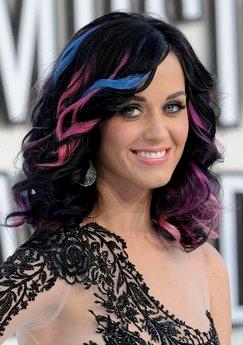
In this Sept. 12, 2010 photo, Katy Perry arrives at the MTV Video Music Awards in Los Angeles. Sesame Street says it won#39;t air a taped segment featuring Perry and Elmo. The pop star , who is known for her risque outfits, wore a gold bustier top as she sang a version of her hit #39;Hot Cold.#39; But some felt it was too revealing for the kid set. Katy Perry#39;s cleavage is fine for Russell Brand — not so for Elmo and Sesame Street. The children#39;s show says it won#39;t air a taped segmen

Read the rest here:
Katy Perry Sesame Street 2010

Durham Libertarians oppose street bond

Durham libertarians are urging city residents to vote no on the street bond referendum that will appear on the November ballot. “Durham is already more than $400 million in debt and the mayor wants to add to that burden,” said Matt Drew, Durham Libertarian Party chair. He said that yearly debt payments are $50 million and $15 million of that is just in interest. City officials estimate that debt-service payments on the proposed $20 million bond would add 0.76 cents per $100 of assessed value to the city's fiscal 2011-12 property tax rate. That would add $11.40 to the tax bill for a $150,000 house. The money is supposed to help clear a backlog of street repairs, according to city officials. This is not the first street bond issue put before Bull City voters. Another $20 million street bond passed with a overwhelming 74 percent of the vote in 2007, but none of that money has actually been spent yet. Drew questions why the city is borrowing money to fund basic infrastructure, yet giving away millions of dollars in corporate welfare. “While the city is funding basic services through debt, the city council just voted to hand over $4.2 million dollars in corporate welfare to Greenfire (a private developer) to build a hotel,” Matt Drew said. Drew was only one of two people who spoke against the Greenfire welfare grant at the public hearing September 20. “Somehow we can find dollars in our budget to pad corporate profits, but not for road construction,” he said. “That’s just wrong. It’s setting the stage for even more borrowing to fund basic city services in the future.” In addition to increasing taxes earlier this year, he said that the city council is going to increase taxes again to pay for this bond. “Ask yourself: do these tax increases ever go away once the bond is paid off,” he said. He said that the city council just needs to make the hard decisions, set priorities and pay for the repairs from the general fund. “Voters should send the council the message that we’re tired of living beyond our means, and that we should be paying for basic services once instead of twice through interest,” Drew said. http://www.examiner.com/libertarian-in-raleigh/durham-llibertarians-oppose-stree… added by: shanklinmike

Ecstasy Used In Therapy To Treat PTSD

Approximately 18 percent of U.S. soldiers returning from the Iraq and Afghan wars in the first decade of the 21st century have been diagnosed with Post Traumatic Stress Disorder (PTSD), a condition characterized by debilitating anxiety. New research published in the Journal of Psychopharmacology investigated the safety and efficacy of MDMA, a controlled substance known on the street as “ecstasy,” for treatment of PTSD. The researchers found 58 percent of subjects experienced improved symptoms compared to placebo. This double-blind pilot study involved 20 test subjects. To be eligible, they had to meet all the criteria for crime or war-related chronic PTSD. Their symptoms had to be moderate to severe, as well as resistant to at least three months of prior treatment with traditional PTSD drugs. The researchers split the test subjects into two groups. In the experimental group, 12 subjects underwent two 8-hour psychotherapy sessions while dosed with MDMA. In the control group, 8 subjects underwent two 8-hour psychotherapy sessions while dosed with a placebo. To measure the outcomes, the researchers used the Clinician-Administered PTSD Scale (CAPS) test to assess the subjects’ symptoms before treatment, four days after treatment, and two months after treatment. At all three measured points in time, 10 of the 12 MDMA-treated patients (83 percent) showed a clinical response to the treatment, whereas only 2 of the 8 placebo-treated patients (25 percent) did. Furthermore, those in the placebo group were offered to be treated with MDMA after they completed the first trial and 100 percent no longer met the criteria for PTSD. An unexpected result of the study was the return of three participants to work, who were previously unable due to PTSD symptoms. Treatment with MDMA was safe, though subjects showed elevated blood pressure and body temperature while on the drug, these effects did not last. PTSD poses a significant risk to those afflicted with it. Traditional drug therapy for PTSD effectively treats about 45 to 47 percent of the patients. Victims of the condition tend to experience much higher incidences of disability, emotional suffering, drug abuse, and suicide. The researchers suspected that MDMA might help PTSD patients because the drug is known to “decrease feelings of fear while maintaining a clear-headed, alert state of consciousness.” added by: singrrr

Andy Samberg and Amy Poehler Channel Ben Affleck and Blake Lively in New SNL Promos

Good news, Saturday Night Live fans! If the season premiere this Saturday night is as funny as the newly released promos featuring host Amy Poehler and Andy Samberg, then it will be pretty funny. Hilarious even. Click ahead to watch the Parks & Recreation plug The Town for no reason whatsoever, while simultaneously calling Katy Perry a “hooha.” She must have seen her Sesame Street appearance too.

Visit link:
Andy Samberg and Amy Poehler Channel Ben Affleck and Blake Lively in New SNL Promos

What Ben Affleck’s Comeback Can Teach Hollywood About Hygiene and Hits

Ben Affleck’s box-office champ, The Town , is about the section of Boston where nobody shaves, which should be no surprise. When movie stars age or fade, they often seek to restablish their legitimacy by directing themselves in scrappy, hygiene-challenged movies you can smell. Affleck scored an A, but does he ruin the curve for others?

View post:
What Ben Affleck’s Comeback Can Teach Hollywood About Hygiene and Hits